A research partnership led by the Australian Composites Manufacturing CRC (ACM CRC) has been launched to examine sustainable alternatives to traditional fibreglass in the marine industry, as millions of vessels worldwide approach the end of their operational life with limited recycling options.
Announced in Sydney, the two-year, $1.9 million project brings together explorer Lisa Blair, ACM CRC, UNSW Sydney and Steber International under the initiative “Sustainable Composites for Next Gen Boat Hulls.”
According to ACM CRC, an estimated 35 to 40 million fibreglass boats globally are reaching end of life, with many disposed of in landfills or marine environments due to the lack of scalable recycling pathways.
ACM CRC chief executive Luke Preston said the increasing use of advanced composites across industries must be matched with efforts to address their environmental impact.
“Composites are transforming mobility across aviation, marine, automotive and beyond – lighter, stronger, more efficient,” he said. “But as we accelerate their adoption, we have a responsibility to ensure we are not trading one environmental problem for another. The ACM CRC and its partners are committed to ensuring that the composites revolution is built on a truly circular foundation.”
The project will investigate basalt fibre, derived from volcanic rock, used in combination with bio-resins as a potential alternative to glass reinforced plastic (GRP), which has been widely used in boatbuilding for decades.
The research will assess material performance, scalability and circularity, alongside practical validation through the construction of a test hull.
Environmental concerns linked to fibreglass have been highlighted in previous research, including a University of Brighton study that identified fibreglass particles in marine ecosystems. Project participants said such findings point to broader risks that are not yet fully understood.
Blair said further research into long-term impacts remains limited. “The reality is that high volume research into the long-term impacts of fibreglass just does not exist yet; we are only seeing the tip of the iceberg,” she said.
Blair added, “But the lack of historical data does not change the fact that a solution needs to be found and we as an industry need to transition towards a circular economy.”
At UNSW Sydney, materials research will be led by Scientia Professor Gangadhara Prusty, focusing on identifying basalt fibres and bio-resins that meet industry requirements.
“We are identifying the right bioresins and basalt fibres, available in sufficient quantities and with sufficient properties, to demonstrate a solution allowing the entire boat industry to offer more sustainable products,” he said. He added that findings from the project would be made available to industry.
A life cycle assessment and environmental modelling component will be conducted by SOENECS. Its founder, Professor David Greenfield, said the work could support a shift in material use across the sector.
“This project highlights a critical materials challenge, with millions of Glass Reinforced Plastic vessels reaching end of life without a viable circular pathway,” he said. “The transition to alternatives such as basalt fibre and advanced bio-resins offers a credible route to redesign material flows in the marine sector.”
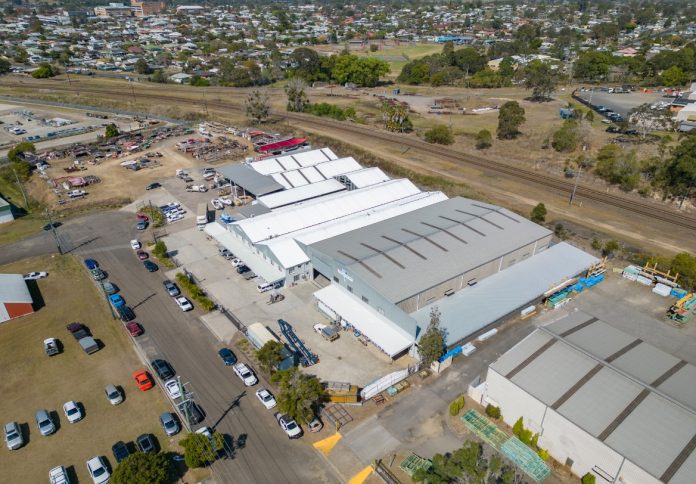
Steber International will construct a dedicated test vessel to assess the performance and repairability of the materials under real-world conditions. Managing director Alan Steber said the project also aims to ensure compatibility with existing manufacturing processes.
“We are currently building recreational, commercial and defence vessels and hopefully one day we will see a complete, sustainable, reliable, affordable, and safe composite material for all industries,” he said.
The research will also inform a planned expedition by Blair, who intends to build a new vessel using the materials developed through the project for a future Arctic sailing attempt.
Project partners said the broader objective is to deliver a verified and scalable pathway to support the marine industry’s transition towards more sustainable materials.