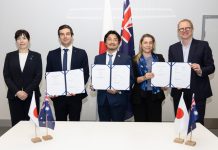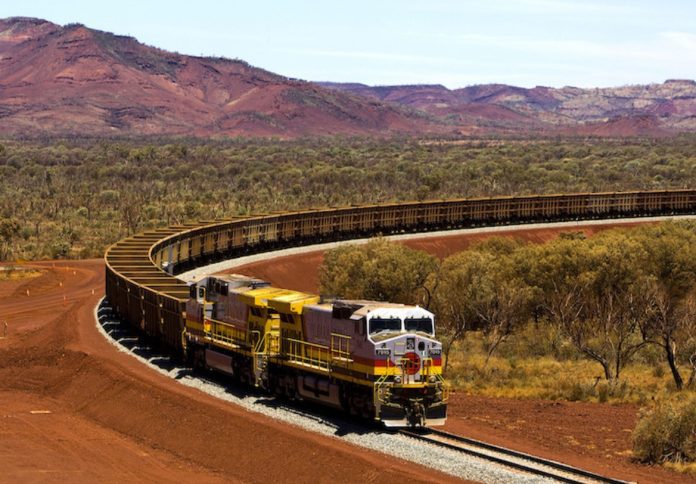
Monash University’s Institute of Railway Technology (Monash IRT) and Rio Tinto have signed a Master Supply Agreement to provide railway research and development services aimed at improving the performance, safety and reliability of Rio Tinto’s rail network in Western Australia.
The agreement will see Monash IRT deliver research and engineering services aligned with Rio Tinto’s ongoing strategy to enhance its heavy haul rail operations in the Pilbara region, according to a university news release.
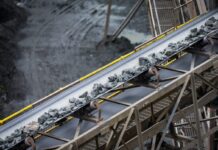
The work will cover a range of areas within Rio Tinto’s autonomous AutoHaul system, including real-time asset health condition monitoring, asset protection, asset life extension, vehicle-track interface analysis and rail welding.
Monash IRT will also be responsible for managing and analysing data from Instrumented Ore Car (IOC) technology, which was designed and installed by the institute on Rio Tinto’s fleet. The data is intended to support maintenance planning and operational optimisation.
Monash University’s Dean of Engineering, Professor Yiannis Ventikos, said the agreement reflects the university’s applied research capability.
“This agreement highlights the depth of expertise across Monash and our ability to support large-scale, high-performance infrastructure and operations,” Professor Ventikos said.
“By combining advanced research capability with strong industry collaboration, we are helping to improve safety, reliability and innovation in the critical systems that underpin Australia’s economy and communities.”
Monash IRT Director, Professor Ravi Ravitharan, said the arrangement builds on an existing relationship between the two organisations.
“This Master Supply Agreement formalises and strengthens our collaboration with Rio Tinto, enabling us to provide integrated research, engineering and data-driven solutions across Rio Tinto’s heavy haul rail network,” Professor Ravitharan said.
He said the institute would continue applying expertise across vehicle-track interaction, materials performance, condition monitoring and digital systems to support safe and efficient rail operations in the Pilbara.
Rio Tinto Iron Ore Managing Director, Pilbara Rail, Port & Services, Chris Osborn, said safety remains a key focus for the company.
“By extending our agreement with the Monash Institute of Railway Technology, we’re bringing leading science, engineering and data-driven insight to continuously improve Rio Tinto’s 2,000 kilometre network in the Pilbara,” Osborn said.