Sponsored content by Commonwealth Bank of Australia
For manufacturers supplying consumer-facing markets, understanding demand conditions has become increasingly important in an environment shaped by cautious spending, rising costs and intense competition.
CommBank’s Manufacturing Signals Report uses de-identified consumer spending data from over 7 million Australians to provide an indication of downstream demand across key manufacturing-linked sectors. While consumer spending does not capture the full picture of manufacturing performance, particularly factors such as import competition, input costs or export demand, it can provide a useful signal of how end-market activity is developing.
The report shows that demand conditions across several major consumer sectors that manufacturers supply into strengthened over the year to March 2026, although the pace and drivers of growth varied significantly.
Demand conditions across food and beverage manufacturing remain strong
Food and beverage remains one of the strongest and most resilient sectors. Consumer spending across categories such as supermarkets, hospitality, catering and food retail increased 5.0% year-on-year to $243.8 billion, outpacing inflation. The data covering the annual period to end of March 2026 indicates consumers are purchasing more frequently (up 1.6% YoY) and spending more overall (up 1.5% YoY), particularly in Western Australia and Queensland. However, rising labour, freight and energy costs continue to place pressure on manufacturers despite improving demand conditions.
Manufacturers are responding by investing in operational flexibility and production capacity. Take Remedy Drinks, for example. It now supplies more than 20 countries, and has used working capital facilities secured against inventory and receivables to support export growth, inventory management, and production expansion as demand increased across international markets.
However, rising freight, labour, and energy costs continue to place pressure on manufacturers, despite improving demand conditions. Businesses are increasingly balancing growth opportunities with the need to maintain cash flow discipline and supply chain security.
Steady consumer demand trends across retail-linked sectors
Consumer goods categories also recorded steady growth, with spending rising 4.8% year-on-year to $25.4 billion in the 12 months to March 2026. Demand has remained resilient despite broader uncertainty, supported by increases in both purchasing frequency and basket size.
Import competition remains a major consideration for domestic manufacturers, but strengthening consumer demand may create opportunities for businesses competing in specialised or value-added segments.
Home improvement-related spending grew more moderately, increasing 2.9% year-on-year to $41.0 billion. While higher financing and construction costs have weighed on renovation activity, the report found that regional spending growth outpaced metro-area growth in several states, particularly in South Australia and Western Australia. These trends may support opportunities for manufacturers supplying local housing and renovation markets.
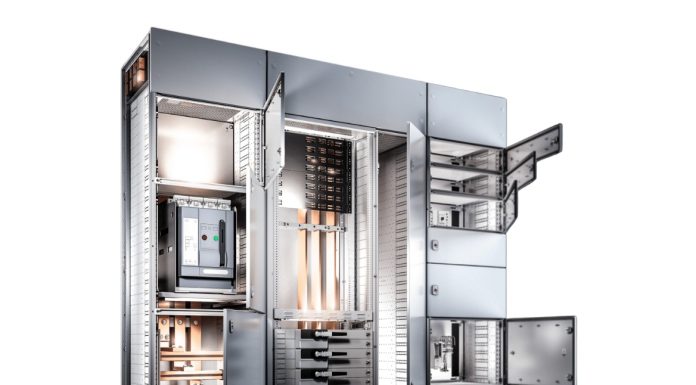
Manufacturers, such as Delta Panels, are also seeing long-term infrastructure opportunities emerge, with the business preparing for future demand linked to The Brisbane 2032 Olympic and Paralympic Games and broader infrastructure investment.
What downstream demand signals indicate across key manufacturing sectors
Across these sectors, the report highlights an important theme for Australian manufacturers: downstream consumer demand has generally remained resilient, even as operating conditions become more challenging. For domestic manufacturers, this may present opportunities to capture growth, strengthen customer relationships and compete in specialised market segments.
Meanwhile, manufacturers continue to operate in a highly competitive environment shaped by rising costs, supply chain disruption and global import competition. Understanding where demand is strengthening, stabilising or softening can help businesses make more informed decisions around inventory, production, investment and market focus.
Supporting manufacturers with market insights
The Manufacturing Signals Report combines economic insights with consumer spending trends to help manufacturers interpret changing market conditions and plan accordingly. In addition to these insights, CommBank continues to support manufacturers with trade and working capital finance, and equipment finance solutions, designed to support productivity and growth.
Read the full report
Understand the spending signals that can help manufacturers plan, adapt, and grow. Read the CommBank Manufacturing Signals Report now.
Sources: CommBank iQ transaction data in the period between April 2025 to March 2026, and where relevant, compared to annual spending between April 2024 and March 2025; Australian Bureau of Statistics (March 2026) Consumer Price Index, Australia; Australian Bureau of Statistics (April 2026) Building Approvals, Australia; Australian Industry Group (March 2026) Australian Industry Index; S&P Global (March 2026) Australia Manufacturing PMI.
This advertorial is intended to provide general information of an educational nature only. Any opinions, conclusions or recommendations are reasonably held or made, based on the information available at the time of its publication. Commonwealth Bank of Australia ABN 48 123 123 124 AFSL and Australian credit licence 234945.
This article contains information provided by CommBank and is intended for general use only. It does not take into account your personal, professional, or business circumstances. Please seek professional advice and review the product’s terms and conditions before making any decisions based on this information.