
Australian advanced composites manufacturer Sydney Composites is developing a rapid cycle heat transfer moulding process that could reduce production cycle times and increase output as the company looks to expand into new markets.
The Wetherill Park-based manufacturer is undertaking the 12-month project with support from the Australian Composites Manufacturing Cooperative Research Centre (ACM CRC), alongside aerodynamics specialist JKF Consultants and special purpose machinery builder McMillan Engineering Group.
According to ACM CRC, the technology could reduce cycle times from about four hours to 10 minutes, while helping Sydney Composites reduce labour, energy and asset depreciation costs associated with production.
“It’s a manufacturing method combining a few different curing methods,” said Luke Preston, CEO of ACM CRC.
Preston said the process could increase Sydney Composites’ output by between 400 and 650 per cent, while providing a new production capability for the Australian composites sector.
“The commercial potential is huge, and it introduces an important new production capability to Australia,” he said.
Sydney Composites CEO, founder and owner Greg Kerba said the technology could help address challenges faced by local composites manufacturers, including skills shortages associated with manual layup production and the cost of operating in Australia.
“We haven’t found anyone in Australia deploying rapid cycle heat transfer moulding, so that gives us a unique offering,” Kerba said.
The company, which marks its tenth anniversary in December, produces carbon fibre components for applications including motorsport, renewable energy, medical and industrial markets.
The project will initially focus on theoretical validation before implementation and testing, with the aim of progressing the technology from Technology Readiness Level 3 to TRL7.
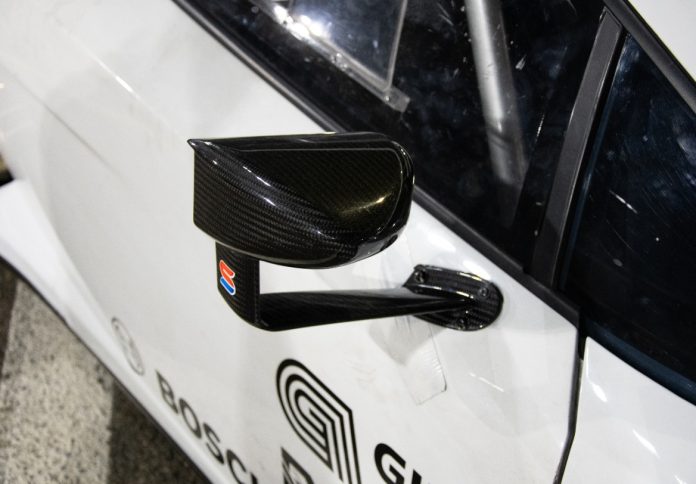
The first products will be a batch of 10 composite aerofoil car mirrors. These will undergo testing against components produced using traditional oven or autoclave curing methods, including comparisons of mechanical strength.
Sydney Composites said the process could eventually support production for markets beyond automotive, including medical technology and renewable energy.
Kerba said the project could also create opportunities for the company to support other customers and markets as the technology develops.
“Being a small business, having an idea and trying to push innovation in manufacturing can be a lonely path,” he said.
“We are appreciative of the ACM CRC team backing us and our ambitions to grow,” Kerba added.