Hazer Group has signed a non-binding memorandum of understanding (MOU) with Continual Renewable Ventures to assess opportunities for developing low-carbon liquid fuels production in Australia, including sustainable aviation fuel (SAF) and renewable diesel (RD), according to an announcement from Hazer.
The agreement marks Hazer’s first step into the emerging clean fuels sector, which focuses on producing lower-emissions alternatives to conventional jet fuel and diesel.
Hazer said the production of SAF and RD requires biofeedstock and hydrogen, creating a potential role for the company’s low-emissions hydrogen technology.
Hazer chief executive officer and managing director Glenn Corrie said interest in partnering with the company had increased across several sectors, including in Western Australia.
“Recent world events have brought into focus the need for Australia to not just be a primary producer and exporter of raw materials, but to move back into domestic processing and production of refined products, including diesel and jet fuels,” Corrie said.
He said Hazer’s hydrogen technology, combined with locally grown canola and CRV’s technology expertise, could support domestic fuel production capability.
CRV founder and managing director Renzo Petersen said the company aimed to support decarbonisation of the fuel industry and improve Australia’s energy security.
Petersen said CRV holds the exclusive Australian and New Zealand licence for Hydro-processed Esters and Fatty Acids (HEFA) technology from XCF Global, which is already operating commercially in the United States.
According to Hazer, CRV is seeking to develop a SAF and renewable diesel production facility in the Kwinana region of Western Australia using canola and hydrogen as feedstock. The company said Kwinana was selected because of its proximity to canola production, industrial infrastructure and aviation hubs.
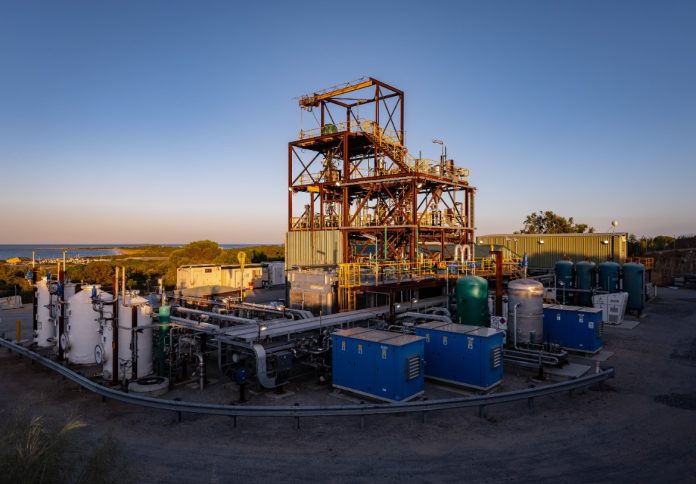
Hazer said its proprietary process produces hydrogen and graphite from natural gas without generating carbon dioxide during production, with the hydrogen intended to be used in HEFA bio-refineries to process canola oil and other feedstocks into SAF and renewable diesel.
The company said SAF is receiving increasing international support as governments and industries seek to reduce aviation emissions, with jet fuel combustion accounting for an estimated 2–3 per cent of global emissions.
Under the MOU, the companies will collaborate on technical workstreams on a non-exclusive basis to assess the integration of Hazer’s hydrogen process with SAF bio-refineries in Australia, including at Kwinana.
The agreement has a two-year term, with each party responsible for its own costs. Hazer noted that further binding agreements would be required before either company makes significant financial commitments.
The content of this article is based on information supplied by Hazer Group Ltd. For more information, please refer to the official company announcement and communications from Hazer. Please consult a licensed and/or registered professional in this area before making any decisions based on the content of this article.