Australia’s manufacturing and food distribution sectors are facing increasing pressure from fuel volatility, fertiliser shortages and changing consumer behaviour, with warehouse automation company Dematic warning that the country’s supply chain infrastructure is being tested by multiple challenges at once.
According to Dematic, instability in global shipping routes and ongoing geopolitical tensions are contributing to volatility in oil prices and disruptions to fertiliser supply, while cost-of-living pressures are changing grocery purchasing patterns across Australia.
The company said these pressures are converging on distribution centres that connect manufacturers, retailers and consumers.
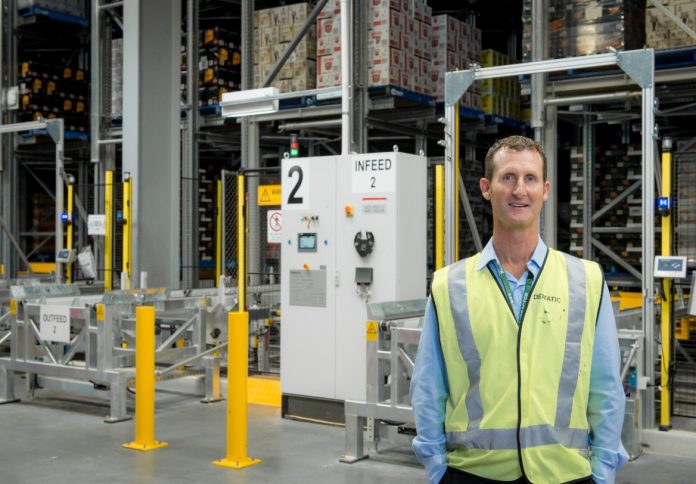
“There is a perfect storm forming around food security in Australia right now. Fuel is volatile. Fertiliser is short. Shopping habits are shifting. And the supply chain is being asked to absorb all of it at once,” said Dave Rubie.
“The businesses that handle this well will be the ones that already designed flexibility into their operations. The businesses that struggle will be the ones still running the supply chain they built for a more predictable decade.”
Dematic said the current environment is accelerating a broader industry shift toward consolidating multiple distribution operations into fewer and more automated facilities, often located alongside manufacturing sites to reduce transport requirements.
Rubie said reducing truck movements and increasing warehouse density could help businesses manage rising freight costs linked to diesel price increases.
“The most obvious way to insulate a food and beverage business from fuel volatility is to reduce the number of truck movements it depends on,” he said.
“That means bringing warehousing and manufacturing onto the same site wherever possible, and consolidating operations that were previously scattered across third-party logistics providers.”
Dematic pointed to several food and beverage operators that have adopted consolidated and automated distribution models in recent years.
Among them, Asahi Beverages’ automated distribution centre at Heathwood in Queensland combined multiple operations into a single site, which Dematic said reduced inter-warehouse truck movements and improved productivity.
The company also referenced Diageo, which consolidated storage operations into a single automated facility to reduce freight costs between sites.
In the meat processing sector, Teys Australia invested in a centralised automated beef aggregation and export facility near the Port of Brisbane. Dematic said the site now handles more than seven million cartons of chilled and frozen beef annually and enables products from multiple processing plants to be combined into single export pallets.
Rubie said businesses that had already redesigned their supply chains around automation and consolidation were now seeing operational advantages.
“What these businesses have in common is that they treated their supply chain as something to be designed, not just operated,” he said.
“The businesses that made those decisions five or ten years ago are in a much stronger position today than the ones that didn’t.”
Dematic also said broader pressures across the agricultural sector, including diesel and fertiliser shortages as well as extreme weather events, were adding strain to Australia’s food supply chain. At the same time, the company said consumers were increasingly shifting toward frozen and longer-life food products as household budgets tightened.
“Australia has been fortunate. We have had a supply chain that was based upon pricing assumptions and guarantee of energy supply and we have not had to think about food security the way other countries have,” Rubie said.
“That is changing. The good news is that the tools to build a more resilient supply chain exist, they are proven, and Australian operators have been quietly adopting them for years. The question now is how quickly the rest of the sector can follow.”