A collaboration between RMIT University and Bristile Roofing has led to the development of sustainable roof tiles made from coal ash and recycled glass, achieving a 13 per cent reduction in CO2 emissions compared to traditional concrete tiles.
According to RMIT University, the innovation reuses materials that would otherwise contribute to landfill, providing a durable and fire-resistant roofing option that meets Australian Standards while demonstrating clear manufacturing potential.
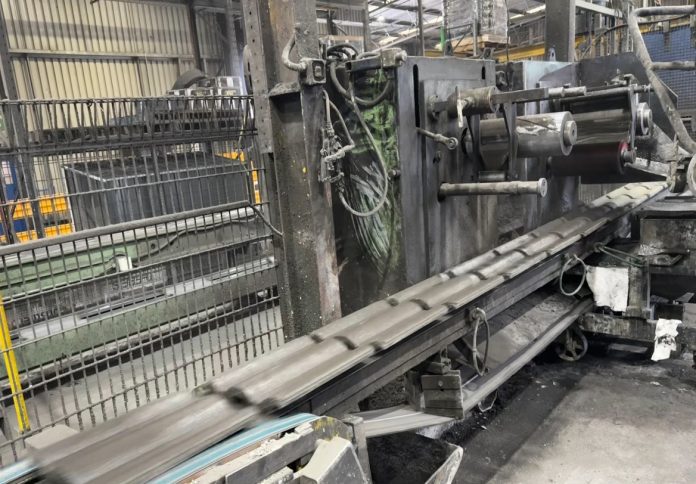
In a news release, the university said that full-scale manufacturing trials conducted at Bristile Roofing’s Melbourne facility produced hundreds of tiles, confirming the product’s environmental and engineering viability.
RMIT project lead, Dr Chamila Gunasekara, said the environmental benefits are driven by the use of harvested pond ash and unwashed recycled glass sand to replace virgin materials.
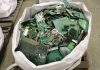
“By replacing 10% of cement with harvested pond ash and 10% of river sand with unwashed glass waste – a total of 20% virgin material replacement – we not only reduce waste going to landfill but also produce an improved concrete product with enhanced fire resistance, a valuable feature for roofing in Australia’s climate,” Dr Gunasekara said.
According to the university the study also found that the tiles achieved a 13 per cent reduction in CO2 emissions across the full life cycle – from raw material production to end-of-life disposal – compared to conventional concrete tiles.
Dr Yulin Patrisia, RMIT Principal Research Fellow, said the research demonstrated that large volumes of industrial waste could be incorporated without compromising quality.
“While harvested waste pond ash is less reactive – primarily due to prolonged storage in settling ponds – it remains an attractive material due to its abundance and contribution to long-term engineering performance,” Dr Patrisia said.
“Our tests showed better dimensional stability, reduced shrinkage cracking, and continued strength gain – making it ideal for durable, non-structural applications.”
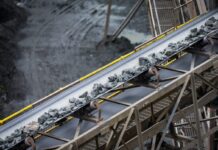
RMIT reported that Australia generates about 12 million tonnes of coal ash and 1.3 million tonnes of glass waste annually, much of which ends up in landfill.
RMIT researchers say this innovation highlights an opportunity to reduce environmental impact through responsible waste use and advanced manufacturing methods.
The university noted the research has also been extended to concrete bricks containing 35 per cent waste materials, which demonstrated 30 per cent better insulation than conventional bricks.
The projects are supported by the ARC Industrial Transformation Research Hub for the Transformation of Reclaimed Waste Resources into Engineered Materials and Solutions for a Circular Economy (TREMS) and Sustainability Victoria’s Circular Economy Markets Fund.
“This is more than just a lab success,” Dr Gunasekara said. “We are ready to scale this for industry.”
Findings from the studies are published in Sustainable Materials and Technologies, The International Journal of Life Cycle Assessment, and Case Studies in Construction Materials.