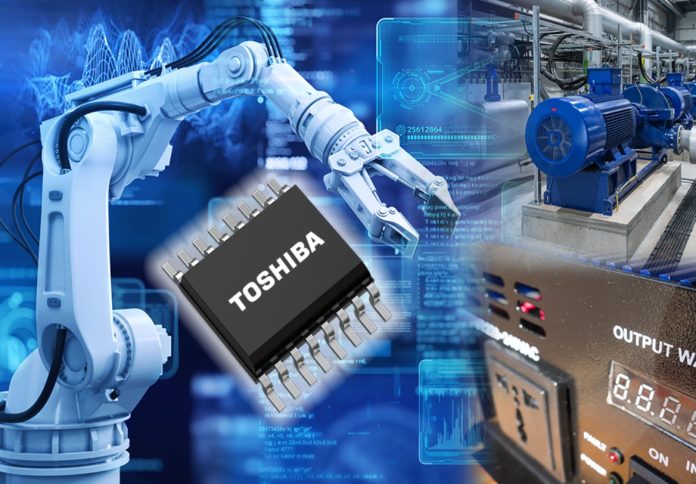
Toshiba Electronic Devices & Storage Corporation has expanded its DCL34xx0B series of quad-channel standard digital isolators for industrial equipment, introducing four new products designed to reduce power consumption while supporting stable operation in electrically noisy environments.
According to Toshiba, the new additions to the series – DCL340L0B, DCL340H0B, DCL342L0B and DCL342H0B – deliver typical current consumption of 0.2mA per channel, are housed in an industry-standard SSOP16 package and support data transmission speeds of up to 25Mbps.
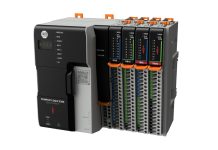
In a media release, the company said the products are intended for use in industrial equipment including programmable logic controllers (PLCs), actuators and inverters, where electrical isolation helps prevent equipment failures, abnormal signal propagation and malfunctions caused by electrical noise.
Toshiba said increasing demand for compact, reliable industrial equipment has also driven the need for isolation devices that offer smaller form factors, long service life and stable performance.
“Reducing overall system power consumption is at the heart of achieving carbon neutrality, and low-power operation has become an increasingly important requirement in electronics, including isolation devices,” the company said.
According to Toshiba, the four new devices use its proprietary magnetic coupling isolation transmission technology and incorporate a new circuit design in the isolation signal transmission section. The company said this enables low power consumption while maintaining stable communication performance.
The products have a minimum isolation voltage rating of 3,000Vrms, operate across a temperature range of -40°C to 125°C and support supply voltages from 2.25V to 5.5V.
Toshiba said these characteristics are intended to support stable equipment operation while helping reduce overall power consumption.
The DCL340L0B and DCL340H0B provide four forward communication channels, while the DCL342L0B and DCL342H0B feature two forward and two reverse channels for bidirectional signal transmission.
Toshiba noted that previously released DCL341L0B and DCL341H0B devices, which have a three-forward/one-reverse channel configuration, remain available for applications including SPI communication interfaces.
The company said the expanded DCL34xx0B series provides greater flexibility for industrial I/O interface applications requiring different multi-channel configurations. It added that the products complement its existing portfolio of digital isolators for industrial and automotive equipment.
“Toshiba will contribute to the realization of carbon neutrality by continuing to expand its lineup of digital isolators for industrial and automotive equipment, broadening the channel count and package options, and pursuing performance improvements,” the company said.
“Along with photocouplers that provide optical isolation, Toshiba will provide a lineup of high-quality isolation devices that support stable operation in communications and control systems requiring electrical isolation.”