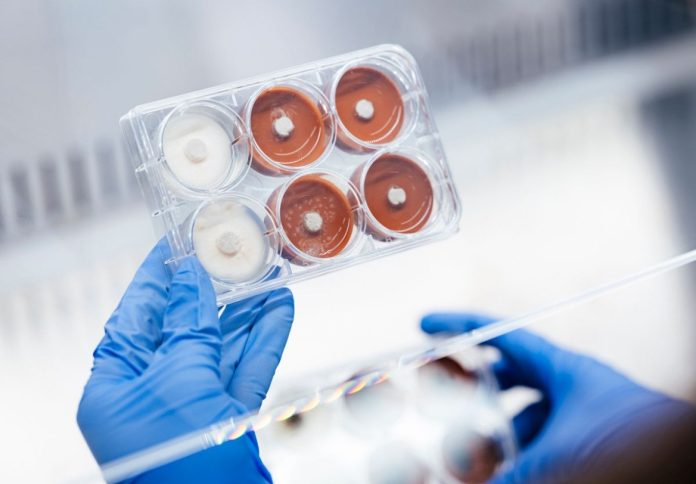
Researchers at The University of Queensland say engineered “super fungi” could offer a lower-impact method for recovering critical minerals from mining waste, while also contributing to site remediation efforts.
The work, led by environmental engineers at UQ’s Biosustainability Hub, focuses on using specially developed fungal strains to process mining tailings and extract trace amounts of high-value metals.
The approach is positioned as an alternative to conventional leaching methods, which typically rely on acids and solvents and can generate additional environmental pressure.
According to researchers, the engineered fungi produce organic acids that help break down mining waste and release embedded metals into a recoverable form.
Dr Denys Villa-Gomez said the fungi were adapted from naturally occurring strains found in mining environments and then enhanced through laboratory selection processes.
“We take fungi that grows naturally in mining and then we engineer them to actually be super, so they can cope with toxic environments and tolerate harsh conditions,” Dr Villa-Gomez said.
He added that the process has shown potential in recovering critical minerals such as vanadium and scandium, which are used in electronics and advanced manufacturing applications.
PhD candidate Fernanda Soto-Montandon said the biological process allows the fungi to transform waste material through their natural metabolism. “Those acids then break down the mining waste, destabilizing the mineral structure and releasing the trapped metals into a liquid form,” she said, adding that the metals could then be recovered for reuse.
The $70 million Biosustainability Hub, launched last week, is intended to support research translation across sectors including mining, energy, manufacturing and food production.
Hub director Professor Esteban Marcellin said the facility aims to bridge early-stage science and industrial application.
“We use cutting-edge synthetic biology to engineer microbes and biological systems to turn waste, emissions and low-value materials into sustainable, high-value products,” Professor Marcellin said.
Researchers said the longer-term goal includes testing the fungi in real mining environments, with Dr Villa-Gomez noting discussions with industry partners are ongoing.
She said the approach could eventually support both mineral recovery and land rehabilitation at active or legacy mine sites.