
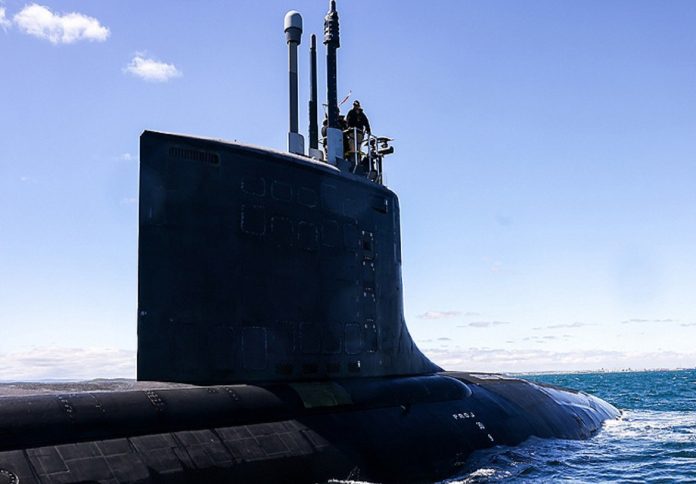
Australia’s planned $425 billion defence capability investment over the next decade could support advanced manufacturing, workforce development and productivity, according to Commonwealth Bank (CommBank), as the government seeks to strengthen the country’s sovereign defence capabilities.
Speaking at CommBank’s 2026 Global Markets Conference, Department of Defence Secretary Meghan Quinn said Australia needed to adapt to a changing security environment and build the industrial capacity required to sustain critical capabilities locally.
“My main message here is we’re not in business as usual, in national security terms,” Quinn said.
She said national defence required coordination across multiple sectors, including banking, industry, healthcare and industrial relations, rather than relying on the Defence sector alone.
CommBank Group Chief Risk Officer Andrew Hinchliff said the scale of planned investment presented an opportunity to develop Australia’s industrial base alongside national security capabilities.
“I think importantly, it’s a national problem. And if we actually get this right … we will foster improved skills across the country,” Hinchliff said.
He said the investment could help build an industrial base supporting productivity, economic resilience and national prosperity.
Workforce development will be a key challenge as Australia expands its defence infrastructure and manufacturing capacity. Australian Naval Infrastructure Chair Ron Finlay said planned infrastructure developments at Osborne in South Australia and Henderson and HMAS Stirling in Western Australia would require capabilities that were not yet available at sufficient scale.
“The workforce development is probably their biggest challenge,” Finlay said.
A new skills and training academy at Osborne is expected to open next year, with capacity for 1,000 students annually. Finlay said developing skills would be essential across infrastructure, shipbuilding and submarine construction.
The investment could also support manufacturing practices and technologies with applications beyond defence. Quinn identified digital twinning and integrated advanced manufacturing as areas with potential to demonstrate productivity improvements across Australian industry.
Finlay said a distributed manufacturing approach could allow components to be produced in Melbourne, Sydney and Perth before being assembled at Osborne, broadening participation in the defence supply chain.
However, developing sovereign capability will also require international expertise and private-sector involvement. Quinn said private companies could contribute specialist knowledge, help allocate project risks and support more efficient delivery.
She also emphasised that self-reliance did not mean producing everything domestically.
“Self-reliance doesn’t mean doing everything here,” Quinn said, adding that Australia needed to identify the capabilities it must maintain and scale locally while continuing to work with international partners.
Amentum Group Director Nuclear Submarines Neil Thumwood said building lasting capability would require investment in Australian workers, supply chains and infrastructure, supported by expertise from established overseas programs.