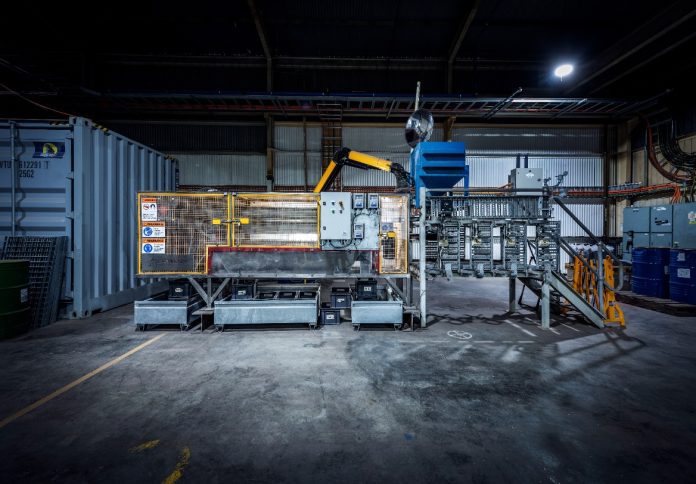
DryFlow Magnetics, an Adelaide-based industrial technology firm, is progressing the manufacturing and deployment of a dry magnetic processing system for iron ore and critical minerals.
In a media release, the company said it is extending its seed funding round, following a $10 million raise completed in December 2025, as it prepares for the manufacturing and installation of its first commercial pilot plant.
The facility is set to be deployed at an active South Australian mine site in partnership with Peak Iron Mines, where it will trial production of high-purity iron ore concentrate.
DryFlow stated that its technology uses a waterless magnetic separation process designed to produce green steel-grade iron concentrate and recover critical minerals from water-constrained or stranded assets.
The company said the approach has been validated through testing on ores across Australia and is intended to address limitations associated with conventional wet processing methods.
Chief executive Brett Boynton described the development as a key step for both the company and the broader industry. “The green steel industry needs high purity iron ore concentrate, and right now Australia doesn’t produce it,” he said.
“Our competitors in Brazil, Canada and Europe are all using wet processing technologies to produce high purity iron ore concentrates. That isn’t an option in Australia, but DryFlow’s technology changes the future for the industry.”
Boynton said the company is focused on scaling manufacturing and deployment. “The technology is proven, the customers are there and the market is large and growing. It is now about how fast we can scale and deploy,” he said.
The company is also seeking additional investment from family offices and private equity groups to support the fabrication of further processing plants. It noted growing commercial interest, including from the United States, where it has secured its first customer amid efforts to unlock critical mineral deposits.
DryFlow said its business model involves installing its technology on customer sites and charging a tolling fee based on processed ore, rather than requiring upfront capital investment. Mr Boynton said this approach is intended to reduce barriers to adoption.
“There’s no upfront capital outlay for the miner, no technology risk, and a significantly simpler flow sheet to produce high purity ore,” he said.
Investors involved in the company’s seed round highlighted the potential impact of the technology. Mark Frayman, managing partner of Orion Industrial Ventures, said the system could address a global processing constraint.
“DryFlow’s technology has the potential to solve a major global processing bottleneck, monetising currently stranded assets and waste streams at a fraction of the capital and operating cost of incumbent processes,” he said.
Justin Travlos, director at Taronga Group, said the technology may contribute to reducing emissions and costs in steel production by improving access to higher-grade inputs.
“By upgrading lower-grade ore into premium concentrate, DryFlow delivers new supply of higher-purity inputs for greener steel across global markets,” he said.
Blair Pritchard, partner at Virescent Ventures, said decarbonising steel production presents a significant commercial opportunity. “A critical piece of that puzzle is efficiently and sustainably securing high-grade iron ore concentrate. DryFlow solves that problem,” he said.
DryFlow said it works with South Australian partners including manufacturing firm Century Engineering and engineering services provider Ammjohn Solutions to support production and deployment.
The company added that its technology could play a role in enabling Australia to upgrade lower-grade iron ore resources and participate in emerging green steel supply chains, while also addressing the challenges of declining ore grades and water constraints in mining regions.