CSIRO has commissioned a new Powder Lab in Clayton, Melbourne, to help Australian manufacturers develop and test tailored metal powders for additive manufacturing.
According to CSIRO, the facility is designed to improve the affordability, reliability and accessibility of specialised feedstocks used in metal 3D printing, including materials for components that can be difficult to produce using conventional manufacturing methods.
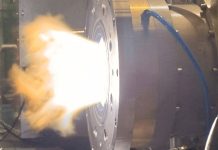
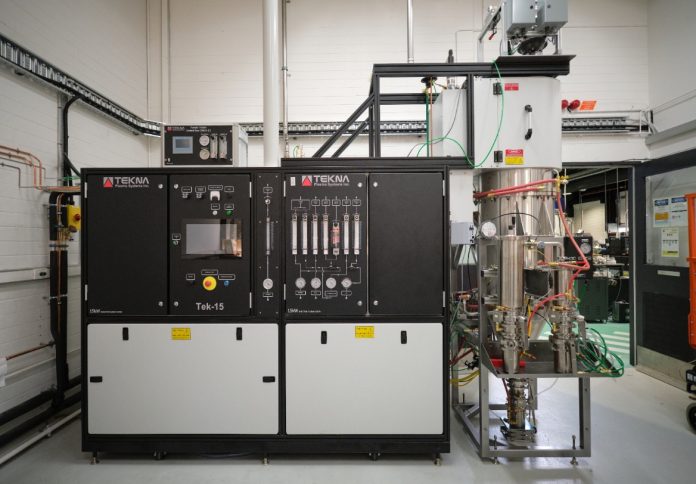
The Powder Lab includes a Tekna TEK SPHERO 15 system, which uses high-temperature radio-frequency plasma to process irregular particles into more spherical powders, and a NARA NHS-1 powder hybridisation mill, which can coat or combine different materials at a microscopic level.
The equipment allows researchers to work with metals, ceramics and composites and develop powders with properties suited to specific manufacturing applications.
Dr Robert Wilson, metallurgical engineer and head of CSIRO’s Powder Lab team, said the facility would support development across the materials and manufacturing process.
“The feedstocks we develop can be used for additive manufacturing and powder metallurgy fabrication of components with enhanced properties,” Dr Wilson said.
He said the work could include “forming compactable powders, to preform compacts used for wire manufacturing through CSIRO’s TiWi® technology.”
CSIRO said manufacturers are increasingly seeking bespoke feedstocks designed for particular products and production processes. The organisation also identified demand for locally produced niche metal powders as manufacturers look to reduce input costs.
“As additive manufacturing becomes increasingly sophisticated, manufacturers are seeking more bespoke feedstocks that are specifically designed to meet the unique requirements of their custom products,” Dr Wilson said.
The Powder Lab has already been used to modify metal and battery materials, with CSIRO working alongside industry and international collaborators, including A*STAR in Singapore and Romar Engineering in Sydney.
“We’ve already had some success modifying high-quality metal and battery materials locally,” Wilson said.
CSIRO said the Powder Lab will work alongside its Lab22 facility to provide an end-to-end capability spanning feedstock development through to prototype fabrication for metallic, composite and technical ceramic applications.
“We’re essentially turning cutting-edge materials research into real-world manufacturing outcomes,” Wilson said.
“It is a practical pathway to reduce waste, cut costs and support circular economy outcomes for industry.”
The organisation said the Powder Lab is now available to industry partners developing tailored feedstocks and advanced manufacturing applications.