
Sponsored content by Xometry
Australian manufacturers have long competed against distance. In an exclusive interview with Australian Manufacturing, Xometry CEO Sanjeev Singh Sahni discusses how AI can help manufacturers access more production capacity and simplify traditionally email-driven supply chains.
Sahni said Xometry operates as a direct response to a persistent gap in custom manufacturing, where sourcing remains heavily reliant on manual processes, email-based requests for quotation (RFQs) and geographically limited supplier networks. That gap is wide in Australia, where digital sourcing is still early.
“Custom manufacturing is a massive, $275 billion global opportunity,” Sahni said. “Yet despite its scale, the vast majority of it remains offline today.”
According to Sahni, Xometry operates as essential digital infrastructure for custom manufacturing: an AI-native marketplace that automates instant quoting, manufacturability assessments, and supplier selection, while managing order execution and quality from end to end.
AI moves beyond automated quoting
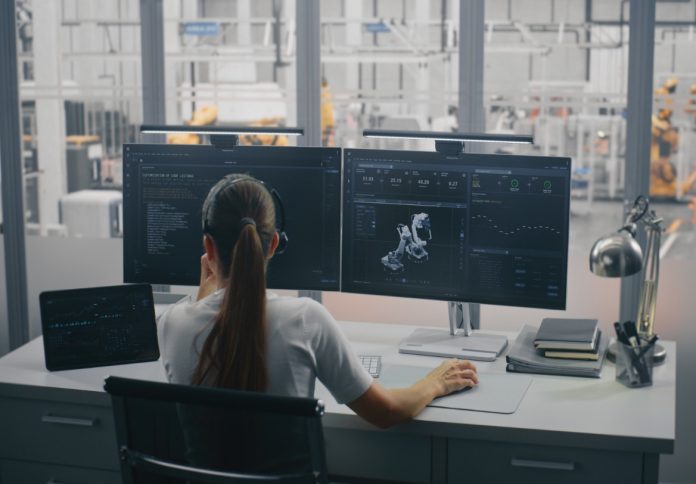
Rather than simply generating price estimates, Sahni says AI is used across the entire Xometry platform to turn digital designs into real-time manufacturing decisions on process selection, pricing, and sourcing.
The company applies AI models to recommend manufacturing processes based on factors such as a part’s geometry and intended application. Its cost-prediction models also assess variables including material, finish and batch size. This makes the entire process of sourcing a matter of minutes for customers rather than the offline process that takes weeks.
On the supplier side, Sahni said Xometry’s sourcing models consider factors such as machine capabilities, quality history and delivery performance when matching jobs with manufacturing partners.
The approach reflects a broader shift in industrial procurement, with Sahni arguing that engineers, procurement teams and supply chain managers increasingly expect faster and more digitally integrated purchasing processes.
“We are accelerating innovation everywhere. Modern industrial teams need on-demand access to manufacturing capacity so they can pivot, scale up, or resolve bottlenecks without carrying heavy fixed overhead,” he said.
Distributed networks and supply chain resilience
Sahni sees distributed manufacturing as key to building resilient supply chains that adapt to market disruptions—shifting capacity away from reliance on local suppliers alone.
Xometry currently has more than 5,000 active suppliers across four continents. According to Sahni, this distributed network enables production to be dynamically redirected whenever individual suppliers face capacity constraints or disruptions, allowing manufacturers to select production options based on speed and total cost.
The company reported $229 million in second quarter 2026 revenue, a 41 per cent year-on-year increase driven by surging adoption among large industrial buyers.
Rather than relying exclusively on fixed production capacity, Sahni said manufacturers can use distributed networks to select production locations according to factors such as proximity, speed and cost.
Xometry operates through manufacturing partners rather than relying solely on its own production facilities. Sahni said the company maintains quality controls by acting as the Manufacturer of Record for orders, while supplier performance is monitored against quality and delivery standards.
Opportunities for Australian manufacturers
For Australia, Sahni said digital manufacturing networks level the playing field, providing smaller manufacturers and engineering teams with enterprise-level procurement power without needing extensive internal resources.
He pointed to Australia’s engineering capabilities across high-value growth sectors, including mining technology, defence, agriculture, medical technology and renewable energy. Australia’s manufacturing sector, which generates $130 billion in industry value and employs 900,000 workers, is getting a major boost from the government’s $22.7 billion Future Made in Australia initiative. But funding only gets technology started.
“Future Made in Australia funds the ambition. Execution happens on the shop floor, and that’s where Australian innovators have been left waiting. Xometry is the digital infrastructure that turns complex designs into physical parts, with quotes in minutes and the world’s manufacturing capacity behind every order,” Sahni stated.
The company’s growth strategy in Australia focuses on providing local buyers with frictionless access to its global marketplace.
He identified established procurement practices as one of the barriers to greater digital adoption, particularly continued reliance on traditional RFQs and geographically limited sourcing.
From offline sourcing to physical AI
Looking ahead, Sahni said manufacturing could move towards a more connected and software-driven model as AI, automation and robotics become more widely adopted.
He expects demand from areas including robotics, autonomous systems and defence to contribute to growth in on-demand manufacturing.
“We are in the opening innings of custom manufacturing, shifting from an offline, fragmented industry to a digital marketplace where buyers and suppliers connect with speed and confidence,” Sahni said.
He emphasized that while AI is unlikely to replace engineering roles, it is likely to eliminate administrative work by providing faster manufacturability analysis, pricing and sourcing information.
Xometry currently has nearly 90,000 active buyers using its marketplace, according to Sahni, as the company continues to expand its digital manufacturing model into markets including Australia.
For more information on Xometry’s digital manufacturing platform and how it connects manufacturers with global production capabilities, visit Xometry.