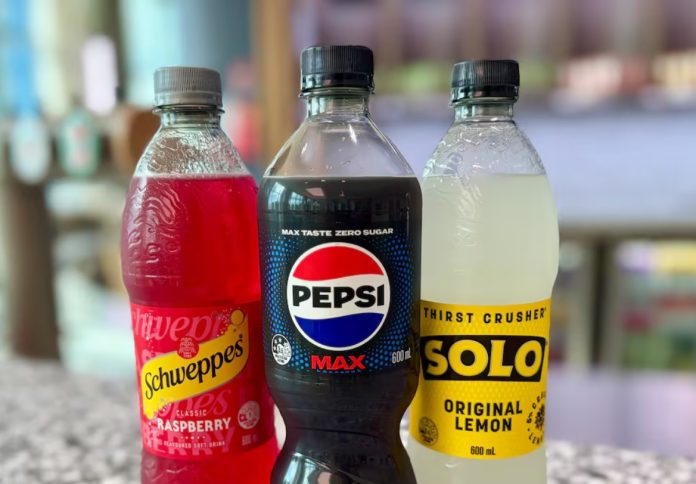
Asahi Beverages has transitioned all of its plastic soft drink bottles in Australia to 100% recycled plastic, excluding caps and labels, in a move the company says will reduce its use of virgin material.
In a news release, the company said the change covers brands including Schweppes, Solo and Pepsi, with Asahi saying around 350 million soft drink bottles produced in Australia each year are now made using recycled plastic. Its Cool Ridge and Frantelle water and Cottee’s cordial bottles have also been converted.
Asahi Beverages Group CEO Amanda Sellers said the change would provide consumers and retailers with greater certainty about the sourcing of plastic used in the company’s bottles.
“This announcement gives Australian consumers and retailers certainty that when they purchase an Asahi-made soft drink, such as Schweppes, Solo or Pepsi Max, the plastic bottle has been more sustainably sourced,” Sellers said.
The company attributed the transition in part to investment in Australia’s Container Deposit Schemes and the development of two PET plastic recycling plants in Albury, NSW, and Altona in Melbourne’s west.
The facilities are part of Circular Plastics Australia (PET), a joint venture involving Asahi Beverages, Cleanaway Waste Management, Pact Group and Coca-Cola Europacific Partners. Asahi said the plants had increased the availability of recycled plastic produced in Australia and enabled the company to source more material domestically.
Container Deposit Schemes have also supplied used bottles that are processed as feedstock for the recycling plants.
Sellers said the initiatives had helped provide the material needed for the company’s transition.
“By recycling old bottles so that they once again become new bottles and repeating the process, everyday Australians are helping create a more circular economy in Australia,” she said.
Asahi said the shift was also intended to strengthen its future supply of plastic bottles, with Sellers describing the redesign of its supply chains as both a sustainability measure and a commercial consideration.
“Redesigning our supply chains this way helps secure our supply of plastic bottles into the future and makes financial sense,” she said.