Australian advanced manufacturing technology developed in Western Australia will be deployed in Timor-Leste under a new agreement between Inspire Robotics and Hyperion Systems, with the project aiming to combine manufacturing, robotics and recycled plastics to support local environmental and economic activities.
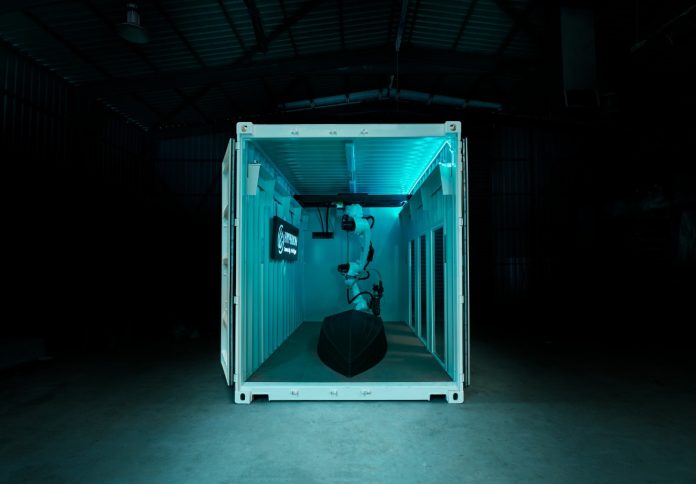
Under the agreement, a Hyperion TitanCell will be deployed and commissioned in Timor-Leste later this year as part of Inspire Robotics’ “Business-in-a-Box” platform, according to Hyperion Systems.
The containerised system is designed to convert locally sourced plastic waste into manufactured products and infrastructure using large-format additive manufacturing, industrial robotics and recycled polymer technology.
The first phase of the project is expected to focus on producing boats and marine equipment for activities including marine surveillance for illegal fishing, mangrove restoration, coastal clean-up and plastic recovery along the Timor-Leste coastline.
Inspire Robotics founder Dr Theodore Blackmon said the initiative was intended to demonstrate how advanced technologies could be deployed directly within communities.
“We believe the future of innovation is not concentrated in major cities or large corporations — it is distributed into communities,” Dr Blackmon said. “This is about turning local problems into local opportunities.”
According to Hyperion, the TitanCell can manufacture products including modular housing components, pontoons, culverts and hulls for autonomous and crewed vessels using difficult-to-recycle plastics recovered from coastal and industrial waste streams.
The company said the technology is intended to reduce reliance on imported materials while allowing communities to manufacture products locally. Hyperion CEO Josh Wigley said the system was designed to take production capability closer to where it is needed.
“The TitanCell was designed to fundamentally rethink manufacturing by taking advanced production capability directly to the point of need,” Wigley said.
The partnership is positioned by the companies as supporting Timor-Leste’s environmental objectives and the ASEAN Regional Action Plan for Combating Marine Debris. Hyperion said it also aligns with President José Ramos-Horta’s vision for the country to become a “plastic-free” and “carbon-free” nation.
Dr Blackmon said the project could provide a model for distributed manufacturing in emerging economies.
“The TitanCell enables advanced manufacturing to be deployed directly within communities that have historically lacked industrial infrastructure,” he said.
Hyperion said commercialisation of the TitanCell has been supported by a $385,000 matched funding grant through the Australian Government’s Industry Growth Program. The funding is intended to support the transition of the technology into export-ready advanced manufacturing capability.
Wigley said Timor-Leste represented the first step in the company’s broader ambitions for deployable manufacturing systems.
“Timor-Leste is only the beginning,” he said. “We see enormous potential for deployable circular manufacturing systems to support remote communities, island nations, disaster recovery operations and emerging economies globally.”
Inspire Robotics said it plans to pursue a similar project with an Australian Indigenous community in a future phase, with further information expected to be released later this year.