U.S.-based tech company Cirrus360 showcased a new automation system designed for small and medium-sized meat processors at the 2026 International Livestock Congress in Houston earlier this month.
The solution, called Edgware, is designed to level the playing field for smaller businesses in the industry by matching larger competitors that can afford specialised, high-quality teams and expensive IT systems.
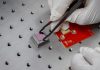
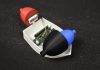
Developed in collaboration with meat-processing specialists at Rail19 and Texas A&M University’s meat science faculty, the system integrates sensors, 5G edge computing, cloud technology, and automation.
The solution allows processors to monitor and analyse production without significant IT investment while meeting USDA and state regulatory requirements, the company explained in a recent announcement.
“This technology will help small businesses to streamline their daily operations, automating tedious and time-consuming processes, reducing manual effort wherever possible, and enabling real-time incident detection and reporting through a centralised management console,” said Sudipta Sen, founder and vice president for product engineering at Cirrus360.
Katie Koon, managing partner at Rail19, highlighted how the technology addresses a critical industry need. “Many low-volume meat processing plants struggle to attain technologies and software, as many are unaffordable or too complex for our scope of work,” Koon noted.
“This collaboration between Cirrus360 and Rail19 has resulted in innovation that combines communications and data sensing technologies in a very applied, sensible way to solve the complex problems faced by small meat processors in trying to achieve their business goals while adhering to the highest standard of food safety and the associated regulations,” said Professor Penny Riggs from Texas A&M University’s Department of Animal Science.
The development of Edgware was funded through a USDA National Institute of Food and Agriculture award, while the 5G integration utilised Cirrus360’s Gabriel platform, which was developed with support from the US Department of Commerce.
The system incorporates private 5G hardware from Pegatron Corporation, including an Intel Xeon Icelake-D server, Pegatron radio unit, 5G camera and sensors, and uses the open-source OCUDU 5G stack.