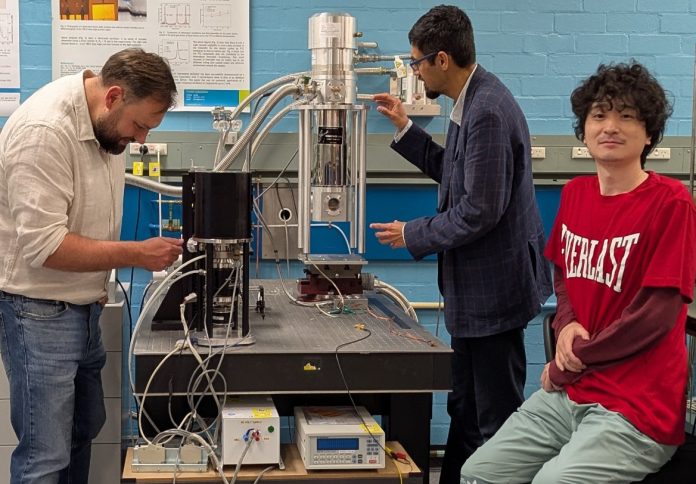
Quantum computing could become a critical enabling technology for managing increasingly complex electricity networks needed to support future manufacturing and industrial decarbonisation, according to new research released by Australia’s national science agency, CSIRO.
Published in Nature Reviews Electrical Engineering, the roadmap developed by CSIRO’s Quantum Systems team and international researchers examines how quantum computing could help address growing computational challenges associated with modern smart grids, which are becoming more dynamic as renewable energy, batteries, electric vehicles and automated systems expand.
CSIRO said electricity networks were evolving from simple one-way systems into highly digitised, two-way grids where energy supply and demand can shift minute by minute due to rooftop solar exports, electric vehicle charging, battery storage and smart appliances.
CSIRO quantum research scientist Dr Zeheng Wang said the main challenge facing future smart grids may not be physical infrastructure, but the computational demands required to manage increasingly complex energy systems.
“The main limitations will actually be in computation,” Dr Wang said.
“Computing power is crucial in managing the flow of energy in complex networks. In other words, some of the most critical problems in future smart grids may eventually be unworkable and unsolvable by today’s best computing systems.”
The researchers said quantum computers operate differently from conventional computing systems and could offer new capabilities in solving certain complex optimisation and modelling problems.
“Quantum computing won’t replace our current everyday computers, but it could become a strategic computational resource for the energy industry,” Dr Wang said.
The study identified potential opportunities for quantum computing in areas including optimisation problems, data-intensive grid calculations, smaller machine-learning applications and system security improvements.
According to the roadmap, smart grid operation involves both device-level control systems for technologies such as solar panels and batteries, and broader system-level management across electricity networks.
“Quantum computing could help address key bottlenecks, unlocking new possibilities at both device-level converters and system-level grid operations,” Dr Wang said.
CSIRO quantum team lead and study co-author Professor Muhammad Usman said electricity grids were becoming increasingly difficult to manage as more devices and energy sources connected to networks.
“With so many different energy sources and devices connected across a busy network, managing the grid becomes incredibly complex – so complex that traditional computers struggle to keep up,” Professor Usman said.
“By leveraging quantum computing, we could potentially model these complex systems more accurately, optimise grid operations faster and monitor networks more securely.”
CSIRO said stronger and more resilient electricity networks would be necessary to support future industrial and manufacturing demands, including AI data centres, transport electrification and large-scale industrial decarbonisation.
However, the researchers cautioned that quantum technologies remain in the early stages of development and are not expected to deliver immediate consumer cost reductions.
“We’re careful not to promise immediate lower power bills because near-term quantum systems are still costly, and the technology is still immature,” the researchers said.
“But the long-term potential is clear – quantum technologies could deliver the efficiency, resilience and security needed to power our future.”
The roadmap also urged the energy sector to begin preparing for future adoption by developing skills, governance frameworks and practical applications before the technology matures.
“The key message is not that quantum computing will solve the energy transition on its own, but that it will become a critical enabling technology, helping build the efficient, resilient and secure electricity systems our future depends on,” Dr Wang said.
“While quantum technologies are still maturing, early recognition and preparation will be essential.”