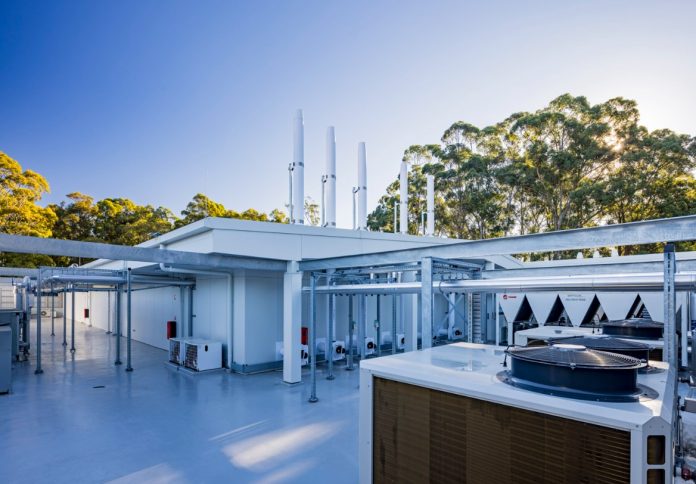
HDR says a facility it describes as Australia’s first dedicated RNA research and manufacturing facility has officially opened within the Macquarie University Innovation Precinct, supporting the development and production of next-generation vaccines, therapies and diagnostics.
Designed by HDR for Health Infrastructure in collaboration with the Office of the Chief Scientist & Engineer, the NSW RNA Bioscience Alliance, Hindmarsh Construction and facility operator Aurora Biosynthetics, the 4,500-square-metre facility is now fully operational following a $96 million investment from the NSW Government.
The facility has been purpose-built to support the development of RNA technologies from research through to clinical readiness. It includes pDNA and mRNA production suites, lipid nanoparticle encapsulation capabilities, pilot-scale fill-and-finish operations, and integrated quality assurance and quality control laboratories.
HDR said the facility has been designed to support Therapeutic Goods Administration approval pathways and Good Manufacturing Practice-aligned operations.
HDR Project Lead Ady Chen said the facility was designed with adaptability in mind.
“The facility is designed to evolve alongside emerging scientific technologies, with rapid adaptability and carefully managed visibility into active spaces, maintaining the precision and containment requirements of RNA production,” Chen said.
“Our approach also grounds the building in its surrounding landscape, creating a humane and restorative environment that supports the wellbeing of the people who work here.”
HDR said it applied its Data-Driven Design approach and computational modelling workflows to test the facility against multiple future production scenarios, allowing for flexibility in production lines, workflows, utility requirements and regulatory expectations.
According to HDR Design Lead Alan Boswell, the architectural design sought to balance scientific requirements with the natural environment.
“The building’s horizontal form is articulated with slender vertical elements that reference the surrounding forest and draw natural light deep into the interior,” Boswell said.
“This creates a calm, grounded environment for complex RNA science, and respects the cultural and ecological character of the site.”
HDR said engagement with Macquarie University’s Walanga Muru, the Office of the Pro Vice-Chancellor, Indigenous Strategy, and consultants Belanjee informed the project’s architectural and landscape outcomes, incorporating cultural narratives, Indigenous medicinal knowledge and spaces for ceremony and reflection.
Sustainability measures include passive design strategies, all-electric services powered by renewable energy, water-saving initiatives and embodied carbon reduction targets. The project also incorporates biodiversity enhancements, shading strategies and light spill controls.
Graeme Spencer, principal of education and science at HDR, said the facility would support the development and manufacturing of RNA-based therapeutics in Australia.
“Purpose-built environments like this are critical to Australia’s ability to develop RNA-based therapeutics at speed,” Spencer said.
“By bringing flexible pilot manufacturing together with collaborative research spaces, the facility strengthens sovereign capability and supports real-world health outcomes.”
HDR said the project adds to its portfolio of science and technology facilities across Australia, including work at the Westmead Health Precinct, the CSIRO Australian Centre for Disease Preparedness and the Sydney Biomedical Accelerator.