Hitachi Energy has marked the completion of commercial operations at the Waratah Super Battery in New South Wales, highlighting the role of its digital control architecture in enabling the battery to respond to grid disturbances within milliseconds.
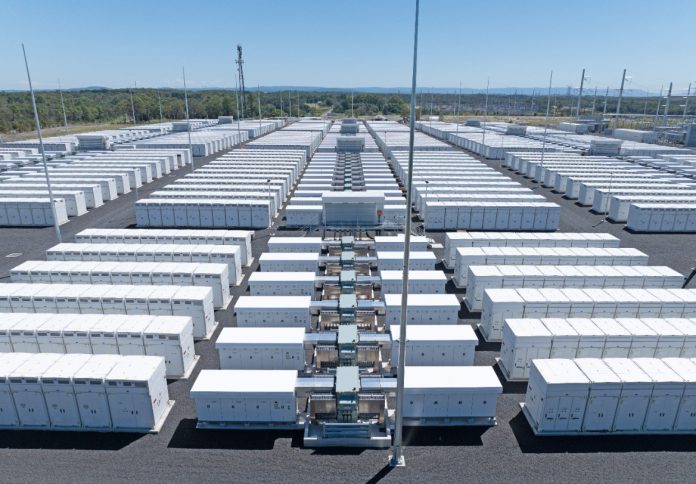
The Waratah Super Battery is designed to provide 850 megawatts (MW) of power and store 1,680 megawatt hours (MWh) of energy. The project was commissioned and overseen by EnergyCo and the NSW Government and is built, owned and operated by Akaysha Energy.
The battery is integrated with Transgrid’s System Integrity Protection Scheme (SIPS), a monitoring and control system designed to detect disturbances across the electricity network and trigger a rapid battery response when required.
Hitachi Energy supplied, installed and commissioned 288 power conversion systems and two power plant controllers for the project. The company said these components form the digital architecture responsible for coordinating the battery’s real-time response.
“Waratah is a giant digital shock absorber, bringing extra resilience and system strength to the electricity network,” Hitachi Energy Australia Managing Director Bernard Norton said.
Norton said the project demonstrates how large-scale battery storage can provide fast-acting support to the electricity grid during critical periods.
“It demonstrates how large-scale battery storage can operate as a strategic grid asset, providing fast-acting support to the grid during critical moments to maintain reliability,” he said.
Hitachi Energy is also providing real-time monitoring, diagnostics and analytics through its HMAX Energy service under a 20-year service agreement. The company said the system is intended to provide ongoing visibility of performance and support proactive maintenance, dispatch optimisation and earlier identification of potential operational issues.
The Waratah Super Battery forms part of the NSW Government’s Electricity Infrastructure Roadmap and is intended to support electricity system reliability as the state transitions from coal-fired generation.
Norton said Hitachi Energy’s controls and software provide the digital systems supporting the battery and its integration with SIPS.
“Sitting behind the battery and the SIPS Control System developed by Transgrid is Hitachi Energy’s smart controls and software – the digital brains behind the project,” he said.
The battery can also capture excess electricity during periods of high generation and release energy during periods of higher demand, according to Hitachi Energy.
“We’re very pleased to be playing such an important role in this nationally significant project for decades to come,” Norton said.