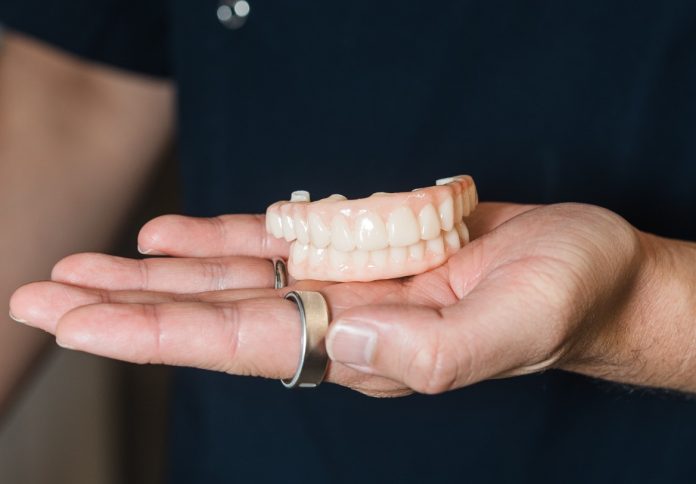
A Tasmanian dental practice is bringing the manufacturing of some implants and prosthetic restorations in-house using 3D printing technology, aiming to reduce turnaround times and reliance on mainland dental laboratories.
Innova Dental, which operates practices in Launceston, Hobart and Rosny, has invested in advanced digital and 3D printing technologies to address supply chain challenges associated with sending patient cases to laboratories in Melbourne, Sydney and Brisbane.
In an exclusive interview with Australian Manufacturing, Innova Dental director and principal dentist Dr Bing Lee explained how the shift has changed the practice’s approach to manufacturing, after previously relying on external laboratories for patient-specific restorations.
“Previously, the supply chain involved us taking an impression and sending it off to a lab,” Dr Lee said.
“We would send them a case, and sometimes, if it’s a minor tweak, they will send it back. It would take us three to four weeks to turn around something that now takes minutes.”
The move has allowed the practice to manufacture some components internally rather than relying entirely on external laboratories. According to Dr Lee, the investment has also changed how the practice approaches the manufacturing process, including the quality of information supplied to external laboratories for work that remains outsourced.
“I think one of the benefits that we didn’t anticipate was just how much more it allowed me to appreciate the manufacturing process and how the manufacturing process is affected by what we send to the lab,” he said.
“That has allowed us to fully appreciate the quality of the input variables that make up a good restoration and to really focus on that.”
Investment brings new capabilities
The technology investment has involved a learning curve, with Dr Lee describing advanced 3D printing as a relatively new field when Innova began its investment.
He said the practice received some advice from dental suppliers but also had to assess competing platforms, materials and technologies itself.
“As an early adopter, what we had to do was navigate the learning curve in terms of learning what the best mix of materials, platforms, and technologies that we were going to use,” Dr Lee said.
He said businesses considering bringing part of their production in-house should consider more than the upfront capital cost, including the time required for training, implementation and ongoing support.
“How much time, energy, and effort would it save you if you didn’t have to liaise with an external party?” he said.
“How much time, effort, and training would you need for you to be able to offer this by training a team or by training yourself?”
The practice has also encountered challenges, including choosing between competing technology platforms and managing maintenance requirements.
Dr Lee said the technology has matured over the past one to two years, while Innova has developed relationships with preferred technicians to improve access to local support where possible.
Training forms part of the investment
Alongside manufacturing and workflow changes, the technology has expanded the roles of staff within the practice, according to Dr Lee.
He said training team members to work with the technology had created opportunities for staff to develop new capabilities and potentially progress into more senior roles.
“One of the great benefits that we’ve seen [is] just how training our team to do more has really allowed them to take pride in what they are doing and take pride in their job,” he said.
Innova also hosted a one-day course for dental students last year focused on digital technology, including scanning and interpreting digital data for treatment planning.
Dr Lee said providing exposure to these technologies was particularly relevant in Tasmania, where access to specialised training opportunities can be more limited.
For other Tasmanian businesses considering similar investments, Dr Lee said the experience demonstrated that adopting emerging manufacturing technology could involve significant challenges, but that the potential benefits extended beyond the initial production capability.
“The learning curve is very, very steep at the start, but it is well worth it,” he said.
“I think the technologies are maturing at a pretty rapid rate. I think someone embarking on that journey today will not face the same sort of issues that we’ve had.”
Innova’s investment reflects a broader shift in how the practice manages digital workflows, with 3D printing forming part of a wider system of digital scanning, treatment planning and manufacturing rather than operating as a standalone technology.