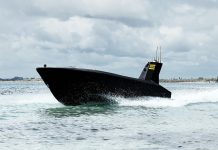
Australian company Hyperion Systems has unveiled what it says is the southern hemisphere’s first 3D-printed Uncrewed Surface Vessel (USV), with the project aimed at advancing maritime manufacturing capability in Western Australia.
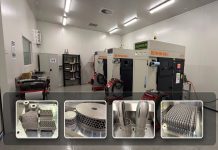
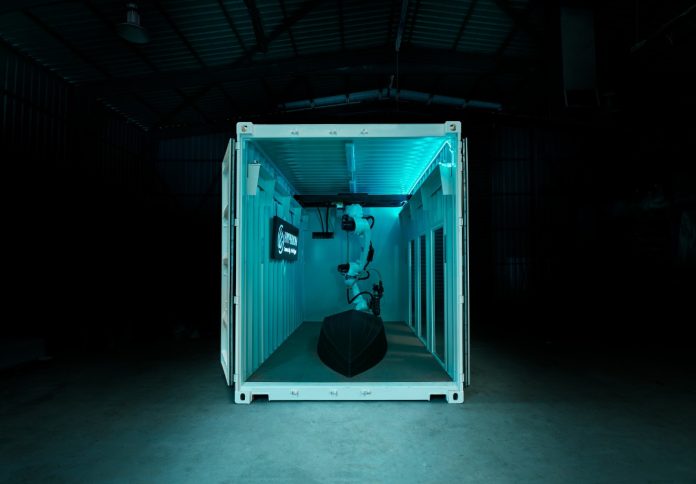
The ASTRA 460 vessel was officially unveiled at the Indian Ocean Defence and Security Conference alongside Hyperion’s deployable “factory in a box” TitanCell manufacturing system.
According to the company, the project combines large-format additive manufacturing, recycled polymer materials and autonomous navigation technology to support sovereign Australian manufacturing capability.
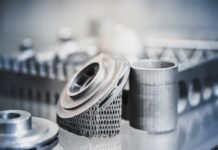
The 4.6-metre ASTRA hulls have been designed by Versatile Marine and will be manufactured in Henderson, Western Australia, using Large Format Additive Manufacturing (LFAM) technology and recycled polymer waste. Autonomous navigation and control systems will be supplied through Greenroom Robotics and its GAMA platform.
The project was unveiled by Western Australian Defence Minister Paul Papalia during the conference.
Hyperion chief executive Joshua Wigley said the manufacturing process would significantly reduce production time compared with conventional boatbuilding methods.
“This dramatic reduction in production time highlights the transformative potential of additive manufacturing for rapid maritime capability and sovereign industrial resilience,” Wigley said.
According to Hyperion, the vessel hull can be manufactured in about 40 hours using LFAM 3D printing, compared with an estimated four to six weeks using traditional methods.
Greenroom Robotics co-founder and chief operating officer Harry Hubbert said the autonomy software was designed to support rapidly adaptable vessel configurations.
“In contested environments, the ability to quickly adapt a vessel to meet evolving mission requirements delivers a significant asymmetric advantage,” Hubbert said.
“In a matter of days, a vessel can be printed, autonomy enabled and on the water. This opens up endless possibilities for rapid, scalable and distributed maritime defence.”
Hyperion said the ASTRA 460 would be among the world’s first LFAM 3D-printed USVs. A larger eight-metre prototype is planned for delivery to a European navy for participation in a naval exercise later in 2026.
The vessel is expected to undergo sea trials starting later this month. Subject to successful testing, Hyperion said the fully autonomous platform would have a top speed of about 40 knots, a range of up to 200 kilometres, and modular payload capabilities for surveillance, security and defence operations.
ASTRA project manager Jacob Kleinman said recent conflicts had demonstrated the operational value of uncrewed surface vessels.
“USVs provide strong force-multiplication advantages. They are significantly cheaper to build and operate than traditional crewed vessels, enable persistent maritime presence, and act as force multipliers for manned fleets,” Kleinman said.
He said the vessel could support intelligence, surveillance, reconnaissance, border protection and maritime security missions.
Hyperion also used the conference to publicly display its TitanCell deployable manufacturing system for the first time. The company said the system combines robotics, 3D printing and recycled polymer technology to manufacture products including autonomous vessel hulls, marine infrastructure and modular housing components.
According to Hyperion, the commercialisation of TitanCell was supported through a $385,000 matched funding grant under the Australian Government’s Industry Growth Program.