Article by Nicholas MacDonald, Manufacturing General Manager, Daikin Australia
Every time I’m having a conversation about Australian manufacturing with industry peers, someone in the room mentions cost. Input costs are high. Logistics are too expensive. It’s cheaper to build it somewhere else and ship it here. Most would agree with these broad statements.
In my years working in Daikin’s manufacturing operations, however, that notion has never quite matched what I see on the ground. Because when you look closely at what local manufacturing delivers, the cost argument becomes less compelling.
Australian Made Week is a timely reminder to have this conversation and to ask a more pertinent question: how does local manufacturing create unique value, and are we fully accounting for it?
When a product is manufactured offshore and shipped to Australia, the end cost is only part of the story. Lead times can stretch from weeks to months. The more sophisticated and customised a product, the more critical the interface between what the customer requires and what the factory makes. When something goes wrong, like a specification mismatch, or a supply disruption, the feedback loop is long and expensive.
In our industry, air conditioning products are engineered to handle specific climate conditions. Australian summers are not the same as Asian or North American summers. The way buildings are constructed and how systems are integrated differ. The humidity profiles differ. What local people perceive as ‘comfort’ differs.
However, when you design and build locally, skilled local people are at the coalface, working in the conditions their products operate in. They are also directly exposed to the industry that installs and maintains the products they are responsible for. This can be a source of competitive advantage for the manufacturer.
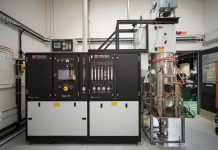
For example, Daikin’s Air Handling Units and packaged air conditioners are built to project specifications like different capacities, performance requirements and custom geometries. Doing that from an offshore facility requires either a high level of standardisation, which limits what you can offer, or ultra strict coordination across time zones and languages. For some particularly challenging applications, the products may not even fit in a shipping container. The complexity and risk related to overseas sourcing has suddenly gone up.
When we do it locally, a contractor can walk through what they need, engineers can turn around a solution, and production can accommodate that requirement. The relationship between the manufacturer and the customer becomes so much more transparent and the risk drops.
The same logic applies to after sales support. With a local manufacturing capability, the same skilled local people that brought the product to life can be made available to address challenges in the field. Learning from those challenges then improves the next iteration of local product. Here we have the potential for a ‘virtuous cycle’, generating ever-improving outcomes for our customers.
The investment in capability compounds over time in ways that are hard to model upfront. Skills development, a local R&D team, and a workforce that understands both the technology and the market, all can play a crucial role in product quality and customer outcomes.
The assumption that offshore is inherently cheaper also ignores how rapidly the technology landscape is shifting. Automation, and digitalised production processes are narrowing the labour cost differential that once made the case for offshoring seem obvious.
The case for local manufacturing is also written into the Australian Made certification itself. That trusted green and gold kangaroo logo recognised by 99% of Australians is far more than a marketing symbol. It signals that a product meets Australian standards, is supported by local expertise, and is backed by a manufacturer with genuine long-term commitment to this market.
Australian Made Week is a great time to make this case publicly. But the argument holds year-round. Local manufacturing’s competitive advantage, built on proximity, agility and resilience, is compelling. So let’s look at the big picture – and remember that the benefits well and truly go beyond any perceived cost savings.