Australia’s manufacturing sector is set to receive a renewable hydrogen boost after the Australian Government announced that Orica has reached a final investment decision (FID) on its Hunter Valley Hydrogen Hub, allowing the project to proceed with support under the Hydrogen Headstart program.
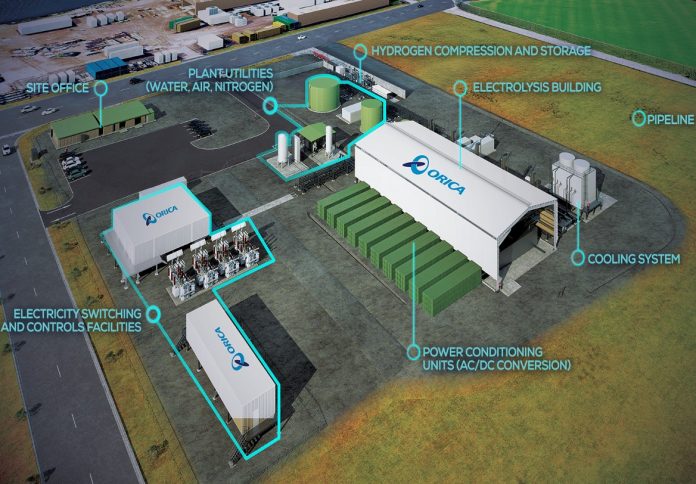
In a media release, the Australian Government said that Orica will install and operate a 50MW electrolyser adjacent to its Kooragang Island ammonia facility near Newcastle.
Orica said in its project fact sheet the hub will produce about 4,700 tonnes of renewable hydrogen annually, replacing around 7.5 per cent of the natural gas used as chemical feedstock in ammonia production.
The government said Orica’s Kooragang Island facility produces approximately 360,000 metric tonnes of ammonia each year, accounting for almost all of New South Wales’ ammonia production capacity.
Orica said the renewable hydrogen will support production of around 26,600 tonnes of low-carbon ammonia annually, with the ammonia and ammonium nitrate supplying industries including mining, agriculture, food and health.
The Australian Government said the project is expected to be among the largest renewable hydrogen developments operating in the southern hemisphere once commissioned.
Minister for Climate Change and Energy Chris Bowen said the project marked an important step towards manufacturing essential products using renewable energy.
“Ammonium nitrate is critical to mining, and this project is about making these essential products here at home, using Australian-made renewable hydrogen,” Bowen said.
He said Orica was the first project to reach final investment decision under the Hydrogen Headstart program.
“This is good for jobs and investment in the Hunter, good for Australia’s energy security, and good for the farmers, miners and transport operators who depend on these products,” he said.
Minister for Industry and Innovation Tim Ayres said the investment would strengthen Australia’s industrial capability and local supply chains.
“Orica’s investment will strengthen Australia’s industrial capability and help secure local supply chains that Australia’s farmers, miners and transport operators rely on,” Ayres said.
Federal Member for Newcastle Sharon Claydon said the investment would help maintain the region’s role in manufacturing while supporting emissions reduction.
“This investment means good, secure local jobs, lower emissions and the opportunity for Newcastle to remain at the forefront of Australian manufacturing and industry,” Claydon said.
In Orica’s fact sheet, Managing Director and CEO Sanjeev Gandhi said the investment would help maintain the competitiveness of the company’s manufacturing operations while supporting Australia’s hydrogen industry.
“This Final Investment Decision marks a critical step in advancing the Hunter Valley Hydrogen Hub from concept to reality,” Gandhi said.
“It reinforces Orica’s commitment to ensuring both our manufacturing facility and the Hunter Valley region remain competitive while strengthening sovereign manufacturing in Australia.”
According to Orica, the project is expected to create up to 160 construction jobs, around 10 ongoing operational roles and approximately $75 million in local and regional economic activity during design and construction. The company estimates the project will reduce emissions by about 35,000 tonnes of carbon dioxide equivalent annually while freeing up natural gas equivalent to the yearly consumption of around 50,000 homes.
The Australian Government awarded the project $432 million through ARENA’s Hydrogen Headstart program in July 2025.
According to Orica, this funding will be provided as operational production credits over 10 years once the project is commercially operational, alongside $70 million in Australian Government capital funding and $45 million from the NSW Government for project development and construction.
According to both the government announcement and Orica, the project has now reached final investment decision, with construction scheduled to begin in the second half of 2026 and first production targeted for early 2029.