
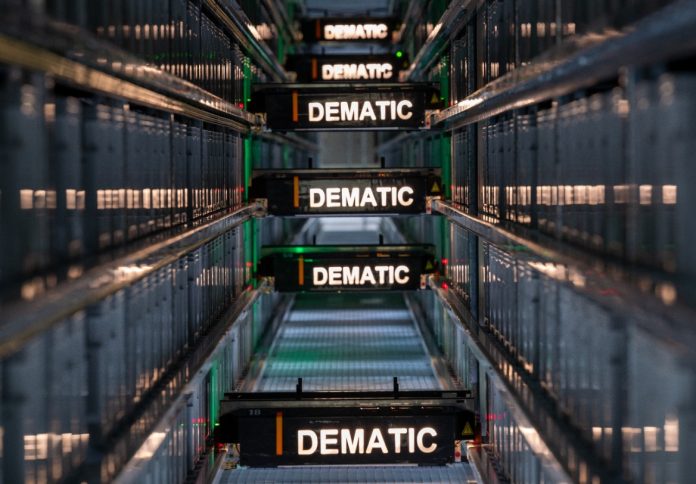
Australia’s manufacturing and distribution sectors are being forced to rethink warehouse design and capacity planning as industrial land near major cities tightens, according to automation provider Dematic.
In a media release, Dematic said constrained land availability is reshaping how manufacturers, retailers and logistics operators approach supply chain infrastructure, with warehouse design increasingly elevated from an operational consideration to a board-level strategic issue.
“The question is no longer simply where to build a warehouse. It is how much capacity and throughput you can get out of every square metre of industrial land you can secure,” said Dave Rubie, Sales Director, Integrated Systems and Mobile Automation at Dematic.
“The days of solving a capacity problem by leasing an extra shed down the road are largely over. The answer now has to come from within the site you already have.”
The comments come as commercial real estate group CBRE forecasts national industrial vacancy in Australia will peak at 3.6 per cent in the second half of 2026, still below long-term equilibrium levels, reflecting continued demand for well-located industrial sites.
Dematic said pressure is most acute in logistics corridors close to major population centres, where proximity is increasingly linked to faster fulfilment expectations and rising transport costs. While overall vacancy rates have edged higher in some areas, prime industrial zones in Sydney, Melbourne and Brisbane continue to show limited availability and rental growth.
One response highlighted in the release is vertical warehouse design, where automation enables facilities to expand capacity upward rather than outward. High-bay automated warehouses can store significantly more inventory on smaller footprints, with some facilities reaching heights of 30 to 45 metres.
Examples cited include the Spearwood facility operated by Americold in Perth, which supplies major grocery retailers and has been designed to maximise storage density on a constrained site.
Dematic, which has delivered automated systems in Australia and New Zealand for decades, also pointed to consolidation as a parallel trend, where businesses reduce multiple facilities into fewer, larger automated hubs to improve efficiency and reduce transport movements.
The release referenced global beverage company Diageo, which consolidated its Australian warehousing network into a single automated distribution centre more than a decade ago, a move Dematic said has delivered ongoing operational and logistics benefits as land and freight costs have increased.
Rubie said the broader shift reflects long-term structural constraints rather than short-term market cycles.
“Every major warehouse investment being approved right now is effectively a bet on what the next twenty years look like,” he said. “The better bets are being made by businesses treating this as a strategic conversation, not a real estate transaction.”
Dematic said manufacturers, in particular, are increasingly exploring on-site automated warehousing adjacent to production facilities, allowing them to reduce transport requirements and make more efficient use of existing land holdings.