Australia’s manufacturing industry is increasingly adopting 3D printing, or additive manufacturing, as companies seek more flexible, resilient and efficient ways to produce high-value components, according to CSIRO.
In expert commentary published by the agency, Australia’s national science agency said the technology builds objects layer by layer from digital designs, offering an alternative to traditional manufacturing methods that remove material through machining.
“3D printing offers a fundamentally different approach to manufacturing and has been a game changer for the manufacturing industry,” said Dr Daniel East, CSIRO’s Advanced Manufacturing and Metals Group Leader.
“Parts can be produced without expensive tooling, it speeds up production and makes it possible to create highly complex or customised designs.”
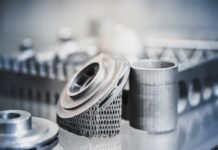
CSIRO said metal 3D printing is particularly suited to producing smaller, complex and high-performance components, including medical implants and aircraft parts. The technology can also enable designs that may be difficult or impossible to manufacture using conventional processes.
However, Dr East noted that additive manufacturing is not suitable for every application.
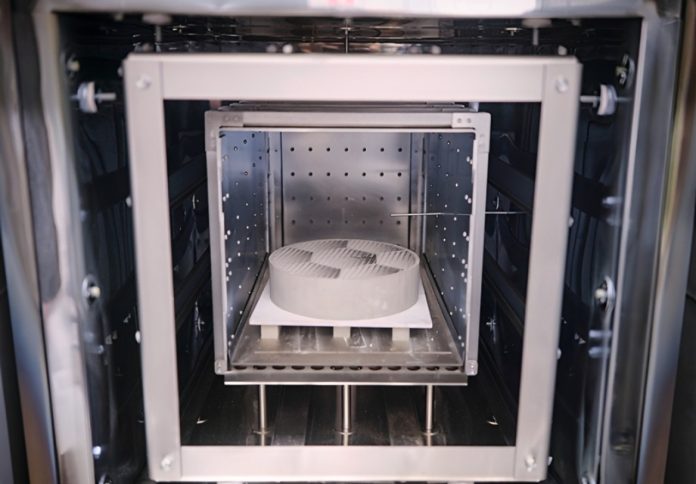
“For simple parts produced in high volumes, traditional manufacturing methods are usually faster and cheaper,” he said, adding that printed components can require further processing, including heating, trimming or smoothing.
CSIRO said additive manufacturing can reduce overall lead times for prototypes, small production runs and customised components by eliminating the need for tooling and moulds. Traditional manufacturing, meanwhile, remains well suited to producing large volumes of identical parts once tooling has been established.
The agency also highlighted the role of materials development in advancing the technology, with additive manufacturing now supporting polymers, metals and ceramics.
Dr Kathie McGregor, CSIRO’s Advanced Materials and Processing Research Director, said the technology could support more resilient and distributed supply chains by enabling production closer to where components are needed.
“Costs are still higher for high-volume, simple components and manufacturers must meet strict material and process qualification requirements,” McGregor said. “Parts often require additional post-processing and inspection, and specialised skills and infrastructure are needed.”
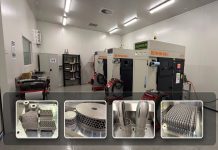
CSIRO supports industry research through its Lab22 Innovation Centre in Clayton, Melbourne, which houses metallic additive manufacturing technologies and has operated for a decade.
Looking ahead, CSIRO said additive manufacturing is moving towards broader industrial use and is expected to complement rather than replace conventional manufacturing.
“Rather than replacing conventional processes, additive manufacturing will sit alongside them as a complementary tool – one that expands what is possible in design, performance and production,” the agency said.
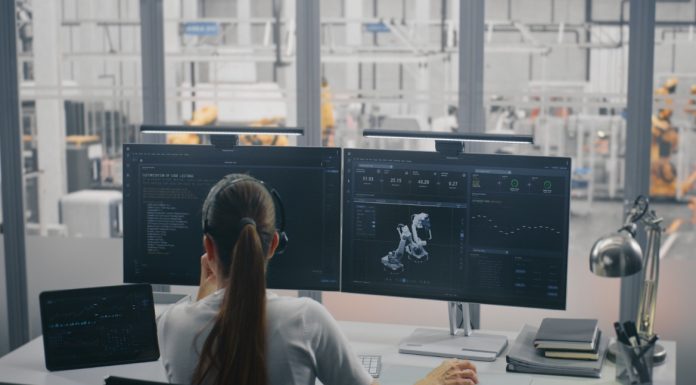
McGregor said future developments could enable parts to be produced closer to where they are required, supported by improved sensing, digital models and materials science.
“This reality is still years away but we are working on the sensing systems, the digital models and the materials science to make this happen,” she said.