Fujitsu and Carnegie Mellon University have jointly established a collaborative facility that will serve as a global research hub for developing and implementing physical AI technologies across various industries.
The new Fujitsu-Carnegie Mellon Physical AI Research Center will host a collaboration between academic research and industrial applications to develop functional physical AI technology.
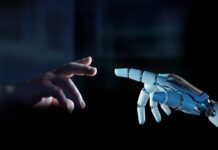
Physical AI refers to artificial intelligence systems capable of operating in physical spaces and interacting with people and their surroundings.
The technology is anticipated to help address major societal issues, including productivity, labour shortages and safety enhancement. Potential applications span multiple sectors, including manufacturing, logistics, construction, infrastructure, and healthcare.
The research centre brings together faculty members from various Carnegie Mellon departments, including robotics, machine learning, language technologies, human-computer interaction, electrical and computer engineering, civil and environmental engineering, and philosophy.
These academics will work directly with Fujitsu’s scientists, engineers, and technicians to develop physical AI systems designed to solve practical challenges.
The collaboration focuses on several key areas: action generation and learning, spatial perception and environmental understanding, multi-robot coordination and optimisation, human-robot collaboration, and the integration of simulation with real-world environments.
The centre will operate from Carnegie Mellon’s Robotics Innovation Center – a 14,000-sqm facility at Hazelwood Green in Pittsburgh that opened in February this year.
“At this research centre, Fujitsu will create new value through the convergence of AI, computing, networking, and robotics, and accelerate the societal implementation of reliable physical AI,” said Vivek Mahajan, corporate executive officer and corporate vice president at Fujitsu.
Mahajan added that the company will expand its research scope to areas supporting social infrastructure and contribute to building a sustainable society where humans and robots coexist and collaborate.
“The Fujitsu-Carnegie Mellon Physical AI Research Center builds on CMU’s focus on developing AI and robotics systems to tackle real-world problems and the university’s collaboration with industry to put those innovations into practice and inspire what’s next. Physical AI will fuel the machines of tomorrow, allowing for competent decision-making, enhanced efficiency, greater safety, and, perhaps most importantly, trust to work alongside humans in critical fields. Carnegie Mellon is excited to have Fujitsu as our partner to continue to lead in physical AI,” said Martial Hebert, dean and university professor of robotics at Carnegie Mellon’s School of Computer Science.
In their joint announcement, both organisations said they will jointly advance research and development of core technologies for physical AI while promoting human-robot collaboration and contributing to the development of a sustainable and resilient society.