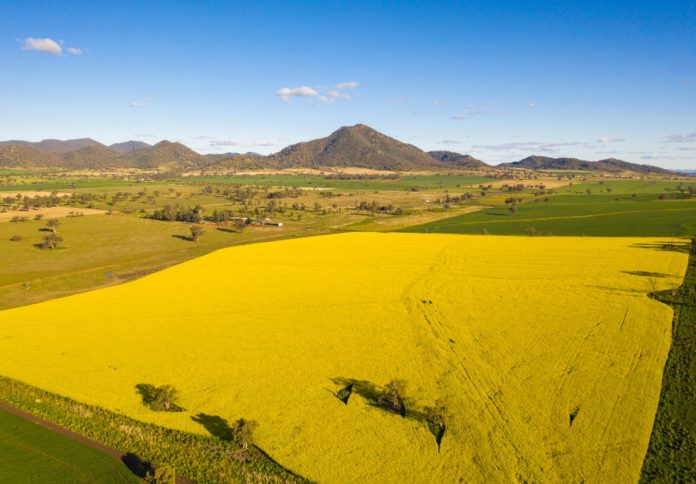
Australia has an opportunity to improve fuel security while reducing emissions by building a domestic renewable fuels industry using locally produced agricultural feedstocks, according to an opinion piece by GrainCorp CEO and Managing Director Robert Spurway.
In the article, Spurway argues that recent geopolitical instability, including disruptions affecting the Strait of Hormuz and global shipping routes, has highlighted Australia’s dependence on imported liquid fuels.
He said Australia imports close to 90 per cent of its liquid fuel requirements, leaving the country exposed to international supply disruptions.
Spurway said renewable fuels, including sustainable aviation fuel (SAF), present an opportunity to strengthen fuel security, support regional economies and reduce emissions in sectors such as aviation.
He noted that Australia already produces key renewable fuel feedstocks, including canola, tallow and used cooking oil, but much of this material is exported for processing overseas before returning as higher-value fuel products.
According to Spurway, around 80 per cent of Australia’s canola crop is exported and used in renewable fuel production overseas, with the potential to produce approximately 1.6 billion litres of fuel annually.
GrainCorp is working with Ampol and IFM Investors on plans for what Spurway described as a proposed large-scale liquid fuel manufacturing project that would use locally sourced feedstocks, including canola, to produce lower-emissions fuels domestically.
He said Australia already has the feedstocks, infrastructure, expertise and supply chains needed to support local renewable fuel production, but argued that greater investment certainty and supportive policy settings would be needed to encourage large-scale development.
Spurway welcomed the Federal Government’s $1.1 billion Cleaner Fuels Program and its planned consultation on demand-side measures to support a domestic SAF industry. He said long-term policy certainty would be important to attract investment and reduce risk for major projects.
Alongside the opinion piece, GrainCorp released its From Paddock to Plane: Feedstock White Paper, developed as part of the company’s role on the Federal Government’s Jet Zero Council.
According to the white paper, Australia’s existing feedstocks—including canola, used cooking oil and other waste streams – could support SAF production equivalent to 117 per cent of the country’s projected jet fuel demand in 2030 without affecting food production.
The report outlines a staged approach to industry development, beginning with the use of existing feedstocks, followed by expanding agricultural supply through improved yields and new crop development, and later investing in next-generation feedstocks and refining technologies.
Spurway said the proposal was aimed at increasing the value derived from Australia’s existing agricultural production rather than creating competition between food and fuel production.
He also cited modelling that suggests a domestic SAF industry could support more than 18,000 jobs and contribute around $36 billion to the Australian economy, with benefits extending to regional communities.
The opinion concludes that, while other countries are advancing renewable fuel industries with supportive policy frameworks, Australia has the resources and capability to develop its own sector if backed by appropriate long-term policy measures.