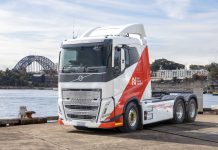
New Energy Transport has announced it has secured new funding to accelerate the rollout of its electric road freight operations in Australia, as it moves to deploy a modular charging and trucking network aimed at supporting large-scale freight electrification.
In a media release, the company said the funding will support an initial fleet of 20 electric prime movers, alongside the deployment of six mobile ultra-fast charging units positioned along key heavy freight corridors in New South Wales.
The charging infrastructure is designed to be modular and mobile, with NET stating it can be operational within 16 weeks and redeployed as demand shifts across regions.
The equity raise was backed by institutional investors, including Jekara Group, along with family offices and high-net-worth investors. It was facilitated by net zero advisory firm Pollination, and NET said it has unlocked an initial $5 million in funding, with further capital expected as the business scales.
NET Co-CEO Daniel Bleakley said the investment comes amid rising demand from major freight customers.
“We’ve seen a surge in demand from some of Australia’s largest transport buyers and this backing means we can meet that demand by providing reliable electric road freight in Australia before the end of the year,” he said.
Bleakley said the company’s modular charging units are designed to avoid permanent infrastructure constraints.
“The modular and mobile charging units we’ve selected aren’t fixed to the ground, they sit on a frame, plug into the grid and are ready for commercial operation within weeks,” he said, adding that the system is intended to support expansion into regional corridors, including agricultural freight routes.
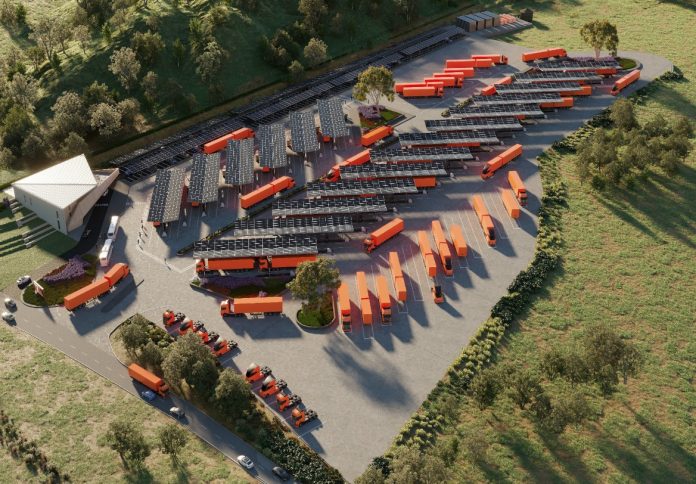
The company is positioning its approach as a vertically integrated electric freight platform, anchored by a planned major depot in Wilton, New South Wales, which has been selected under the Federal Government’s Investor Front Door program. NET said the Wilton site is expected to be operational in late 2027, initially supporting 50 trucks and scaling up to 200 over time, with additional depots planned across major east coast freight corridors by 2031.
Co-CEO Fredrik Pehrsson said infrastructure remains the key barrier to broader adoption. “We’ve proven electric trucks deliver significant productivity and economic benefits… The bottleneck for electrifying road freight isn’t the technology; it’s the charging infrastructure,” he said.
Investor backing also reflected confidence in the commercial case for electrified freight, according to Jekara Group Managing Partner and Founder Kara Frederick, who said the model could improve productivity and reduce transport costs.
Pollination Managing Director William Acworth said the funding supports NET’s transition toward commercial operations while expanding its long-term infrastructure vision, noting that the company’s approach helps address “infrastructure and cost barriers that have held back the electrification of Australian heavy road transport.”
NET said its early deployment phase is intended to generate operational data while supporting freight capacity equivalent to 10,000 kilometres of fully loaded line haul freight per day, with an estimated reduction in diesel use of around 2.5 million litres annually once fully operational.
The company also indicated that future deployments of its mobile charging units could extend into regional freight hubs, including areas such as Yass and Griffith in New South Wales, as part of its broader expansion strategy.