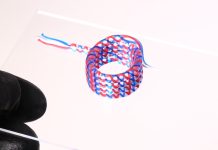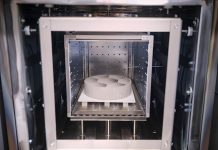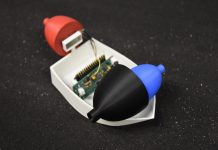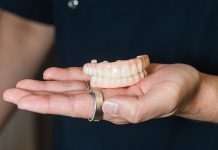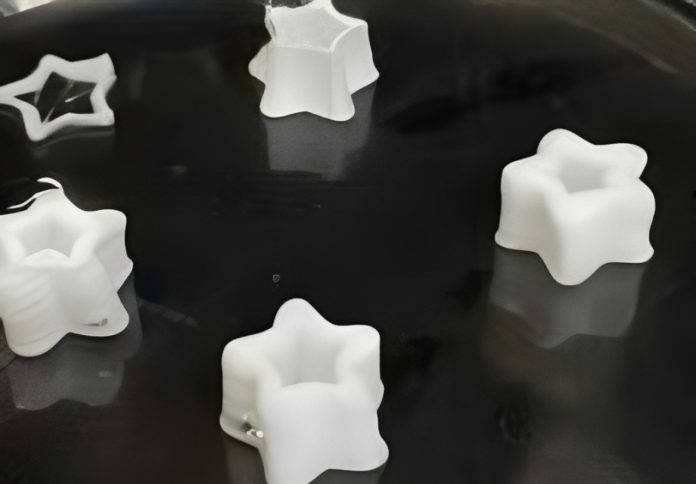
Researchers at The University of Texas at Austin have developed a 3D-printable material that mimics the ability of human tissue to sort and filter molecules, with potential applications spanning medicine, robotics, water treatment and critical mineral recovery.
The material, developed by a team led by Manish Kumar, professor in the Cockrell School of Engineering, is made by tightly packing billions of tiny water droplets using mixing and centrifuge techniques.
In a media release, the researchers said the approach can produce large, tissue-like materials within minutes, addressing the slow formation and scalability challenges associated with existing methods.
“Tissues can separate and transport ions and molecules; that’s how our kidneys or intestines work, taking only what they need and leaving the rest behind,” Kumar said.
According to the University of Texas at Austin, each droplet is separated by a thin membrane, allowing the membranes to connect and form a structure resembling the organisation of cells in human tissue.
The material can also be customised for different functions and 3D-printed using biocompatible materials.
The researchers said this could allow the material to serve as a scaffold for growing new tissues or organs. Its flexibility and responsiveness may also make it suitable for soft robotics, including machines designed for applications such as surgery, search and rescue, and hazardous environments.
In one application, the team added proteins that enabled the material to conduct ion currents, similar to nerve tissue. The researchers said this could support the development of computing systems inspired by the human brain.
Another version was designed to distinguish ammonium from other ions in wastewater, including wastewater associated with oil and gas extraction and municipal treatment. The team said the membrane-based filtering capability could potentially be used to recover critical mineral ions and nutrients from wastewater.
The research, published in Nature Materials, builds on more than a decade of work by Kumar’s group. The latest development was led by student Aida Fica, who developed the approach after encountering repeated challenges with slow formation and material instability.
Using emulsification, the researchers combined two oils with different solubilities to form droplets before tightly packing them through centrifugation.
“This technology now offers a simple, scalable process with endless applications that could be implemented in any laboratory since it only requires basic equipment,” Fica said.
The team is now adapting the technology to recover lithium and other rare-earth elements through a project with the U.S. Department of Energy’s Advanced Research Projects Agency-Energy. Fica and Kumar have also patented the technology and several downstream applications through UT’s Discovery to Impact office.