Australia’s efforts to reduce emissions from steelmaking could receive a boost through a research project led by the University of New South Wales (UNSW) aimed at adapting existing blast furnace technology to operate with lower carbon emissions.
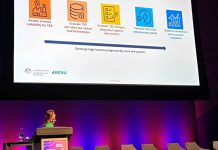
According to the Australian Renewable Energy Agency (ARENA), UNSW’s Shen Lab is leading the development of what it describes as an innovative Renewable Injections-Sustainable Burdens (RISB) process designed to support near-term decarbonisation of blast furnace ironmaking.
The project was selected under ARENA’s Iron and Steel Research and Development Funding Round as part of the Transformative Research Accelerating Commercialisation (TRAC) Program, which seeks to develop solutions for Australia’s iron and steel sector while supporting the transition towards lower-emissions industrial processes.
ARENA said the RISB approach focuses on integrating renewable injection materials and alternative burden materials into conventional blast furnace operations.
The research is intended to address the challenge of reducing emissions from steel production while maintaining the use of Australia’s predominantly lower-grade Pilbara iron ore.
The agency said near-term investment in research and development is an important factor in accelerating the technologies needed to support Australia’s broader transition to net zero emissions.
The project aims to develop and validate a low-emission blast furnace ironmaking process that can be implemented using existing infrastructure, potentially reducing the need for entirely new production systems. ARENA said the research will investigate the use of renewable injection materials, including hydrogen-bearing gases and bio-based alternatives, alongside sustainable burden materials.
The initiative forms part of broader efforts to identify commercially viable pathways for decarbonising the iron and steel sector, which remains one of the world’s largest industrial sources of greenhouse gas emissions.
ARENA said the competitive funding round was designed to encourage the development of technologies capable of supporting both domestic steel decarbonisation and the future competitiveness of Australian iron ore in emerging low-emissions markets.
The project is currently focused on advancing research and development activities to assess the technical feasibility and practical application of the RISB process.
ARENA stated that the work is intended to contribute to the development of lower-emissions ironmaking technologies that could be deployed within existing blast furnace operations as industries pursue emissions reduction objectives.