Manufacturing researchers at the U.S. National Institute of Standards and Technology (NIST) have developed a laser-based technique that could broaden the range of metal alloys produced through additive manufacturing, including difficult-to-make high-entropy alloys.
According to NIST, the method uses modified laser movements to actively stir molten metal during the 3D-printing process, helping different metals blend more evenly at the atomic level. The approach could improve the production of advanced alloys used in demanding applications such as jet engines and nuclear reactors.
“HEAs need to be mixed down to the atomic level,” said NIST physicist Fan Zhang, who co-led the project. “It takes extra effort to get metals to blend together in those ratios.”
High-entropy alloys (HEAs) differ from conventional alloys because they contain several metals in relatively equal proportions rather than relying on a single dominant base metal. While their atomic structure can provide improved performance at elevated temperatures, the materials have historically been difficult to manufacture because their constituent metals tend to separate as they cool.
“It’s difficult to make HEA parts with traditional methods like casting,” Zhang said. “But we believe metal 3D printing could be a solution.”
The NIST-led team, whose findings were published in the journal Additive Manufacturing, adapted laser powder bed fusion technology by programming the laser to move in looping patterns rather than straight lines. The motion effectively stirs the molten material during printing.
“Commercial 3D printer software can’t make these patterns,” said NIST researcher Ho Yeung. “They are very limited in how the laser’s path can be adjusted, so we had to write the software from scratch.”
Because the technique relies on software modifications rather than additional hardware, NIST said existing metal 3D printers could potentially be adapted to use it.
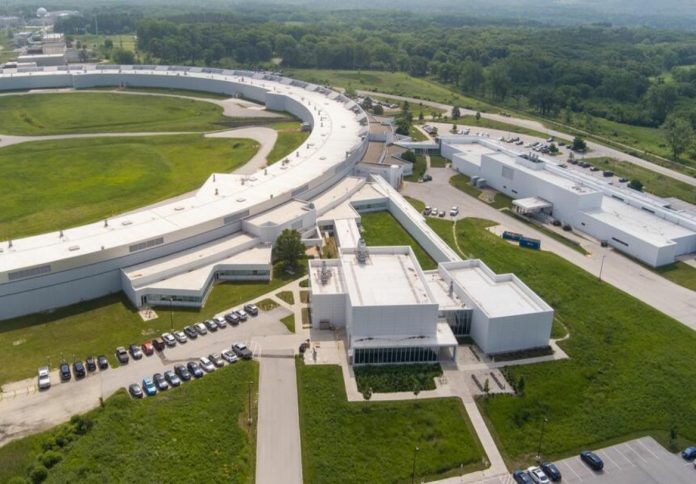
To test the method, researchers attempted to combine a dense refractory high-entropy alloy known as RHEA-19 with a lightweight titanium alloy, materials that are typically difficult to mix. They then partnered with the Advanced Photon Source at Argonne National Laboratory to observe the metals’ atomic structures as they solidified.
“The APS is one of the few photon sources in the world powerful enough to allow us to perform this type of measurement,” Zhang said.
Using high-intensity X-rays and follow-up electron microscopy, the researchers confirmed that the looping laser approach successfully blended the metals, according to NIST.
The agency said the technique could eventually allow manufacturers to produce multiple alloys from a smaller range of elemental powders, reducing costs and increasing flexibility in metal additive manufacturing. It may also enable components to be printed with varying material properties in different sections without relying on welding.
“We want to accelerate alloy making,” Yeung said. “Metal 3D printing has the potential to make parts that used to be impossible.”