Sponsored content by SAP
As manufacturers face growing supply chain disruption, rising costs and increasing operational complexity, artificial intelligence (AI), cloud ERP and connected digital systems are becoming essential tools for improving visibility, resilience and decision-making.
These challenges were the focus of a recent Australian Manufacturing webinar, Future-Ready Digital Manufacturing: Harnessing AI to transform and modernise the end-to-end supply chain, hosted in partnership with SAP and featuring industry leaders from SAP and Daikin Australia, who explored how manufacturers can build more resilient and responsive operations.
The discussion reflected SAP’s broader vision for the Autonomous Enterprise where AI agents move beyond supporting individual processes to helping run operations end-to-end, reinforcing the role of AI-enabled cloud ERP as a foundation for manufacturers seeking greater resilience and real-time optimisation.
Building a connected supply chain
Opening the webinar discussion, Steven Chittenden, Head of Digital Supply Chain Solution Advisory at SAP ANZ, highlighted the importance of managing supply chains as a connected ecosystem.
“Every company has a supply chain,” Chittenden said. “It’s important to manage that full supply chain end-to-end, because if all the links aren’t working properly, something is going to go awry.”
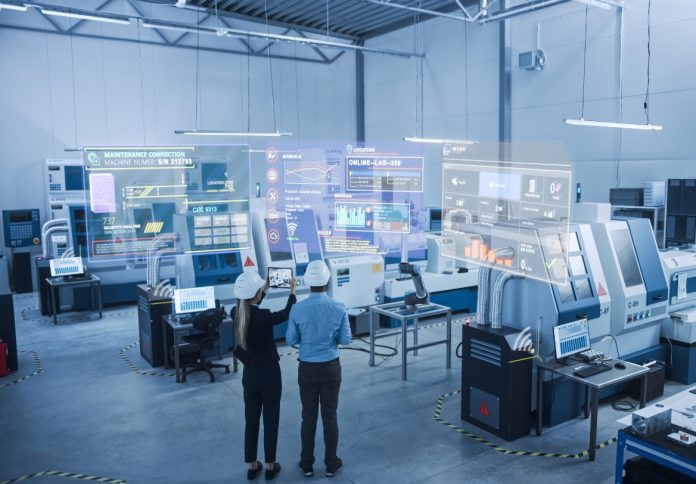
As Chittenden explained, SAP’s AI-powered cloud ERP platform is revolutionising manufacturing by enabling intelligent automation of routine processes such as inventory management, order processing and demand forecasting.
SAP AI continuously analyses multiple scenarios simultaneously, evaluating potential supply chain disruptions, market fluctuations and operational bottlenecks in real time. By processing vast amounts of historical and current data through SAP’s integrated systems, the AI identifies patterns and anomalies that humans might miss, allowing manufacturers to respond faster to unexpected events.
Chittenden noted that this level of technological integration transforms supply chains from reactive firefighting into predictive, proactive operations. With SAP AI, manufacturers can anticipate problems before they occur, optimise resource allocation dynamically, and make data-driven decisions that enhance efficiency, reduce costs, and improve customer satisfaction across their entire value chain.
These capabilities are further strengthened by SAP’s newly announced Knowledge Graph – a machine-readable model built on 50 years of SAP supply chain and manufacturing logic. According to SAP, this allows AI to reason over bills of materials, routings, constraints and compliance rules with far greater accuracy than generic AI models.
Daikin’s local manufacturing investment
Providing a real-world example, the webinar highlighted Daikin Australia and shared how its ongoing investment in local manufacturing and supply chain infrastructure is supporting long-term growth and resilience.
Michael Trad, Director (New Zealand) and General Manager – Supply Chain, IT & Procurement at Daikin Australia, said the company’s migration to SAP S/4HANA Cloud ERP is creating the digital foundation needed for future innovation.
“It’s never about how do we replace people,” Trad said. “It’s about how do we enable people to become more efficient.”
Trad revealed that a recent AI proof-of-concept focused on pallet and vehicle utilisation has already delivered up to 40 per cent improvement in efficiency.
Daikin’s results mirror SAP’s direction of an Autonomous Enterprise where more than 200 autonomous agents were introduced to automate planning, quality, maintenance and logistics workflows. Daikin’s 40% efficiency gain in pallet and vehicle utilisation is an early example of how autonomous optimisation can deliver measurable value on the shop floor.
AI as a tool for local manufacturing resilience
In the webinar, Nick MacDonald, General Manager of Manufacturing at Daikin Australia, said AI presents a major opportunity to redirect time away from manual, non-value-added tasks and towards higher-value customer outcomes.
“A good business is still a good business,” MacDonald said, reinforcing that AI should strengthen — not replace — manufacturing fundamentals.
This aligns with SAP’s industry-specific AI innovations, with SAP introducing capabilities such as predictive maintenance agents, autonomous scheduling and real-time quality intelligence to augment human expertise rather than replace it.
To discover how future-ready manufacturers are leveraging AI, digital intelligence and real-time optimisation to build more resilient and efficient supply chains, access the full webinar recording on demand here.
This article contains information provided by SAP and is intended for general use only. It does not take into account your personal, professional, or business circumstances. Please seek professional advice and review the product’s terms and conditions before making any decisions based on this information.