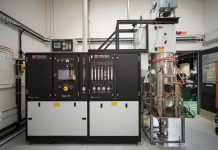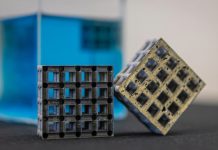
Researchers at Oak Ridge National Laboratory (ORNL) have developed a new high-temperature, 3D-printable aluminum alloy that they say could expand the use of lightweight materials in automotive and aerospace applications while improving energy efficiency.
According to ORNL, the alloy, known as DuAlumin-3D, was developed in less than three years through research conducted at the US Department of Energy’s Manufacturing Demonstration Facility.
The laboratory said the material was designed to address longstanding limitations associated with aluminum alloys used in additive manufacturing.
ORNL said additive manufacturing, also known as 3D printing, offers opportunities to improve component performance through complex geometries, enhanced material properties and more energy-efficient production methods. However, the laboratory noted that only a small fraction of existing alloys are suitable for additive manufacturing processes.
A key challenge has been the tendency of conventional high-strength aluminum alloys to develop cracks during the cooling stage of additive manufacturing, a phenomenon known as “hot cracking.”
Although some modifications have improved printability, ORNL said those materials have generally failed to maintain the mechanical integrity needed at temperatures between 250 and 400 degrees Celsius.
To address this issue, researchers designed DuAlumin-3D, an aluminum-based alloy containing cerium, nickel and zirconium.
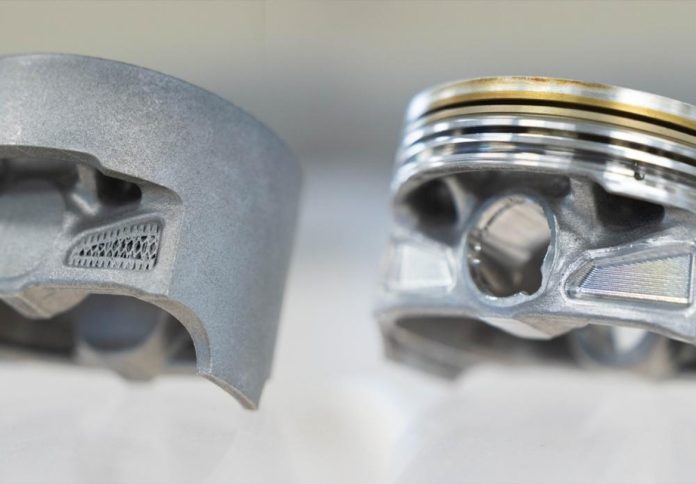
According to ORNL, the alloy resists processing defects and forms nanoscale strengthening particles during printing, enabling the production of complex components such as pistons and heat exchangers while retaining mechanical properties at temperatures of up to 400 degrees Celsius.
The laboratory reported that DuAlumin-3D was produced at more than 99.9 per cent density and demonstrated what ORNL described as the best-known creep resistance for a bulk aluminum alloy at 400 degrees Celsius. Creep resistance refers to a material’s ability to resist gradual, permanent deformation under prolonged exposure to heat and stress.
ORNL also said the alloy exhibited strong fatigue performance at 350 degrees Celsius, allowing it to withstand repeated cycles of stress without failure. The material achieved a yield strength of 100 megapascals at 400 degrees Celsius and increased the safe operating temperature of aluminum alloys by approximately 150 degrees Celsius compared with previous alternatives.
According to the laboratory, the development process was accelerated through the use of a range of research capabilities, including rapid X-ray computed tomography, advanced electron microscopy, mechanical testing, computational thermodynamics and in situ neutron diffraction.
ORNL said the approach could be adapted to speed the development of other alloys for additive manufacturing.
The laboratory highlighted the potential economic and energy benefits associated with the alloy’s adoption.
ORNL said DuAlumin-3D is approximately half the weight of titanium and nearly six times more thermally conductive. In aviation applications, replacing titanium heat exchangers with the new alloy could reduce aircraft weight by hundreds of pounds.
If deployed across commercial aircraft fleets, ORNL estimated the material could contribute to annual savings of more than 50 million gallons of jet fuel, equivalent to more than US$120 million in fuel costs.
ORNL also identified possible applications in future automotive engines. According to the laboratory, replacing existing aluminum alloys with DuAlumin-3D could increase peak cylinder temperatures by 50 to 100 degrees Celsius and, when combined with additive manufacturing design flexibility, improve engine thermodynamic efficiency by up to 10 per cent.
ORNL estimated that adoption by 10 per cent of the US automotive sector could generate approximately US$3 billion in annual fuel savings.
The laboratory noted that DuAlumin-3D received an R&D 100 Award and that, in 2025, General Motors incorporated the alloy into its Low Mass and High Efficiency Medium-Duty Truck Engine, a project that also received an R&D 100 Award.
ORNL said the research was supported by the US Department of Energy’s Advanced Materials and Manufacturing Technologies and Vehicle Technologies Offices under CRADA #NFE-20-08161.