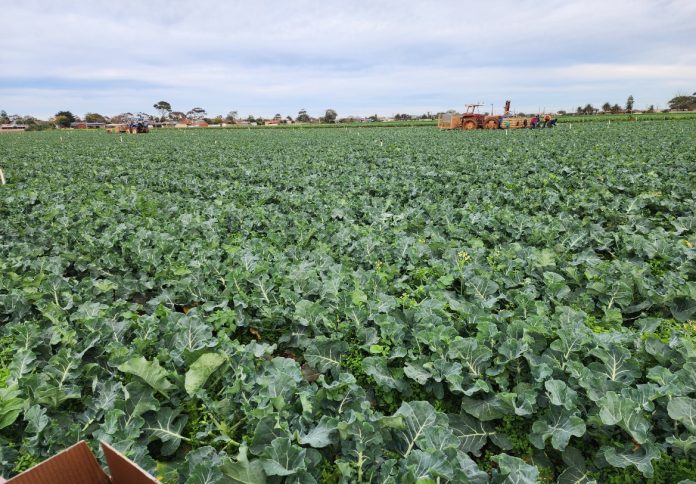
A new RMIT study suggests a high-power ultrasound process could offer food manufacturers a way to extract protein from discarded cauliflower leaves, pointing to potential value in vegetable waste streams.
In a news release, the university stated the early-stage research indicates that ultrasound-assisted extraction can improve protein recovery from cauliflower leaves, a by-product that is often discarded despite containing protein and dietary fibre.
The findings suggest the resulting leaf protein concentrate could have future applications in food and animal feed, with implications for manufacturers looking to utilise agricultural by-products.
Lead researcher Professor Asgar Farahnaky from RMIT’s School of Science said the team tested cauliflower leaves sourced from a commercial farm in western Melbourne to examine how processing methods affected protein recovery.
“We found that ultrasound improved protein recovery from the leaves,” Farahnaky said.
“Ultrasound uses high-frequency sound waves to disrupt plant cell walls and help release protein from the leaves.”
He said there was increasing interest in alternative protein sources, noting that using existing waste streams could support demand without requiring additional production.
“There is growing interest in alternative protein sources, and using existing waste streams could be a practical way to meet that demand without requiring additional production,” he said.
The study also found that different processing conditions influenced the physical properties of the resulting protein concentrate, including particle size, colour, solubility and structure. Researchers said further work would be needed to assess scalability, energy efficiency and sensory performance in potential food applications.
Study lead author and RMIT PhD candidate Kinjal Furia said the research focused on improving the value of materials already present in the food system.
“If we can use food waste streams more effectively, we can reduce environmental impacts while responding to growing interest in alternative protein sources,” Furia said.
The researchers noted support from Harvest Moon, which supplied cauliflower leaves, and The Leaf Protein Co., which provided in-kind contributions.
The study, titled Sustainable leaf protein concentrate from cauliflower leaves via ultrasonication-assisted extraction and sieve filtration, is published in Food and Bioprocess Technology (DOI: 10.1007/s11947-026-04225-0).